Kitchen
6 Best Countertops For Kitchens (Pros, Cons & Cost Compared)
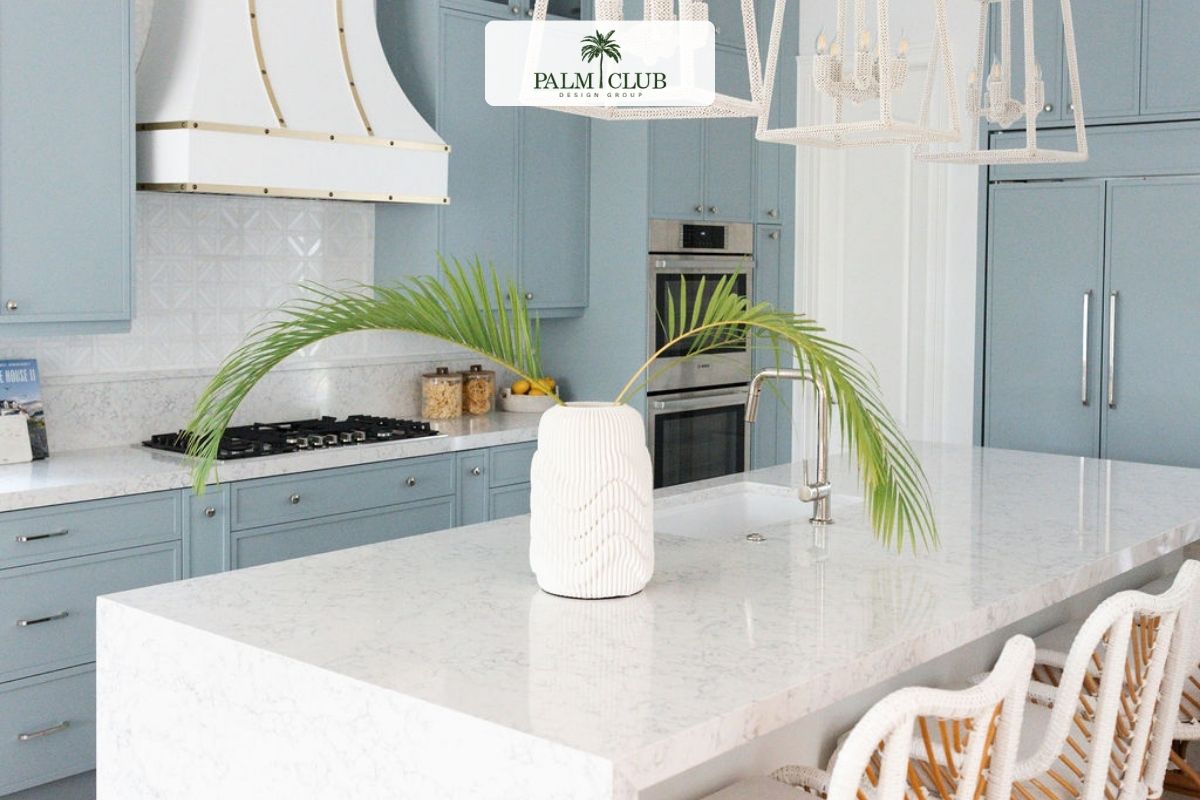
Choosing the best countertops for kitchens often begins with a simple question and quickly turns into a long list of materials, finishes, and tradeoffs.
Quartz, quartzite, marble, granite, soapstone, butcher block.
Each brings its own balance of durability, maintenance, visual character, and cost.
Some surfaces work better for everyday cooking.
Others are chosen for the statement they make in the room.
We’ll break down the best kitchen countertop materials, their pros and cons, and what they typically cost in Palm Beach.
Key Notes
Quartz and soapstone require no sealing and are the easiest countertops to live with day-to-day.
Quartzite and granite rank highest for durability, scratch resistance, and heat tolerance.
Marble and butcher block bring character but trade some performance for warmth and patina.
Quick Comparison: Best Countertops For Kitchens
Material | Best For | Maintenance | Durability | Heat Tolerance | Stain Resistance | Cost Range |
Quartz | Busy, low-maintenance kitchens | Very low | High | Medium | Very high | $90 – $220+ |
Granite | Heat-heavy kitchens with natural variation | Medium (sealed) | High | Very high | High (sealed) | $96 – $216+ |
Quartzite | Marble look with serious toughness | Medium (sealed) | Very high | Very high | High (sealed) | $100 – $170+ |
Marble | Design-led kitchens, patina lovers | High | Medium | High | Low for acids | $120 – $180+ |
Butcher block | Warmth, islands, accent zones | Medium–high | Medium | Low | Medium | $70 – $130+ |
Soapstone | Character, traditional or coastal homes | Low | Medium | Very high | Very high | $70 – $120+ |
*Cost range is per square foot installed in Palm Beach.
1. Quartz Countertops
Best for busy kitchens, low-maintenance remodels, and homeowners who want a bright coastal look without much fuss.
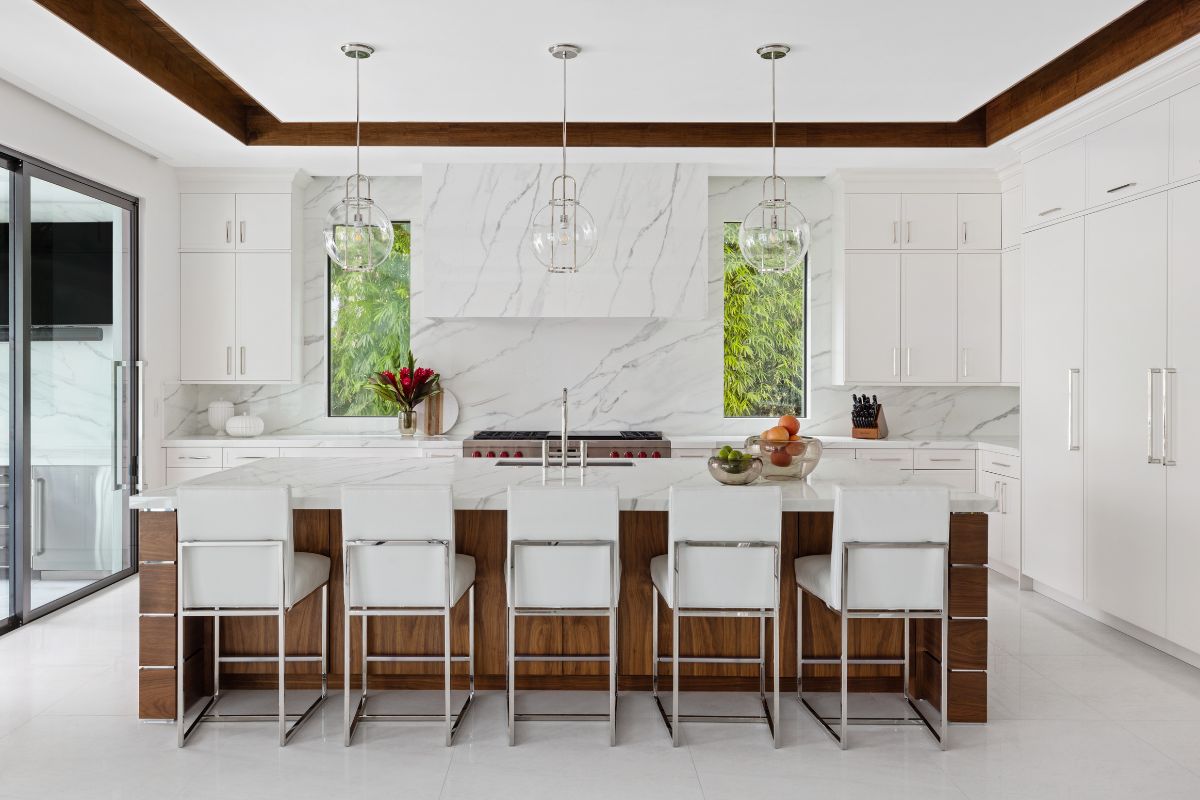
Quartz countertops are engineered stone made from roughly 90–95% ground natural quartz mixed with resins and pigments.
In practice, quartz countertops are one of the easiest materials to live with, which is a big reason quartz is still one of the most popular countertop materials in Palm Beach.
Quartz works especially well in kitchens where the goal is low maintenance, clean lines, and a polished look without the upkeep of marble. It is non-porous, easy to clean, and available in a huge range of colors and patterns, including the marble-look slabs a lot of homeowners want right now.
Pros of Quartz Countertops
Durable and highly scratch-resistant for normal kitchen use
Non-porous surface resists staining from coffee, wine, oils, and sauces
No sealing required
Easy to clean with mild soap and water
Consistent color and patterning make seam placement more manageable
Huge style range, from solid neutrals to dramatic veining
Cons of Quartz Countertops
Not fully heat-proof, so hot pans should not go directly on the surface
Can chip at exposed edges or corners
Seams can still show, especially on heavily veined slabs
Some products can yellow or fade with strong UV exposure
Contains resins, so it does not have the same all-natural appeal as stone
Quartz Countertop Cost In Palm Beach, FL
Basic quartz: about $90 to $116 per sq ft installed
Mid-range quartz: about $116 to $160 per sq ft installed
Premium quartz: about $160 to $220+ per sq ft installed
2. Granite Countertops
Best for homeowners who want natural stone, cook regularly, and care about heat resistance.
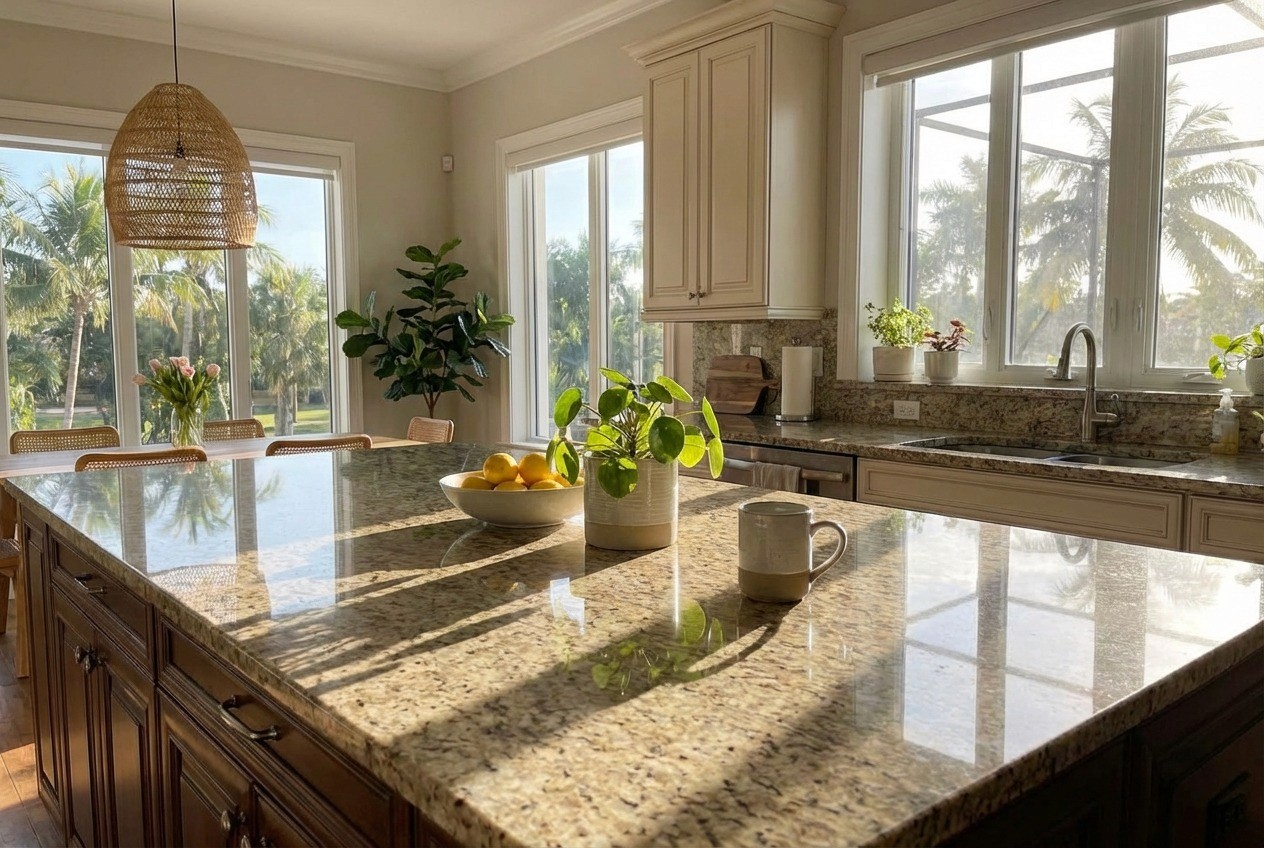
Granite countertops are cut from natural igneous stone, which means every slab has its own mineral patterning, movement, and variation.
Granite countertops remain one of the best countertops for kitchens if you want a real stone surface that is durable, heat-tolerant, and still familiar in the resale market.
It has a more natural, less controlled look than quartz. Some homeowners love that. Some do not. It really comes down to whether you want consistency or character.
Pros of Granite Countertops
Very durable and scratch-resistant
Handles heat better than most engineered surfaces
Every slab is unique
Sealed granite is easy to clean and performs well in kitchens
Strong resale perception in many markets
Cons of Granite Countertops
Needs periodic sealing
Can stain if the sealer wears down and spills sit too long
Can chip or crack at edges with heavy impact
Heavy material may require cabinet support in some layouts
Natural variation can make seams and slab matching trickier
Granite Countertop Cost In Palm Beach, FL
Basic granite: about $96 to $126 per sq ft installed
Mid-range granite: about $126 to $174 per sq ft installed
Premium or exotic granite: about $174 to $216+ per sq ft installed
3. Quartzite Countertops
Best for luxury kitchens, natural-stone lovers, and anyone chasing a marble-like look with better toughness.
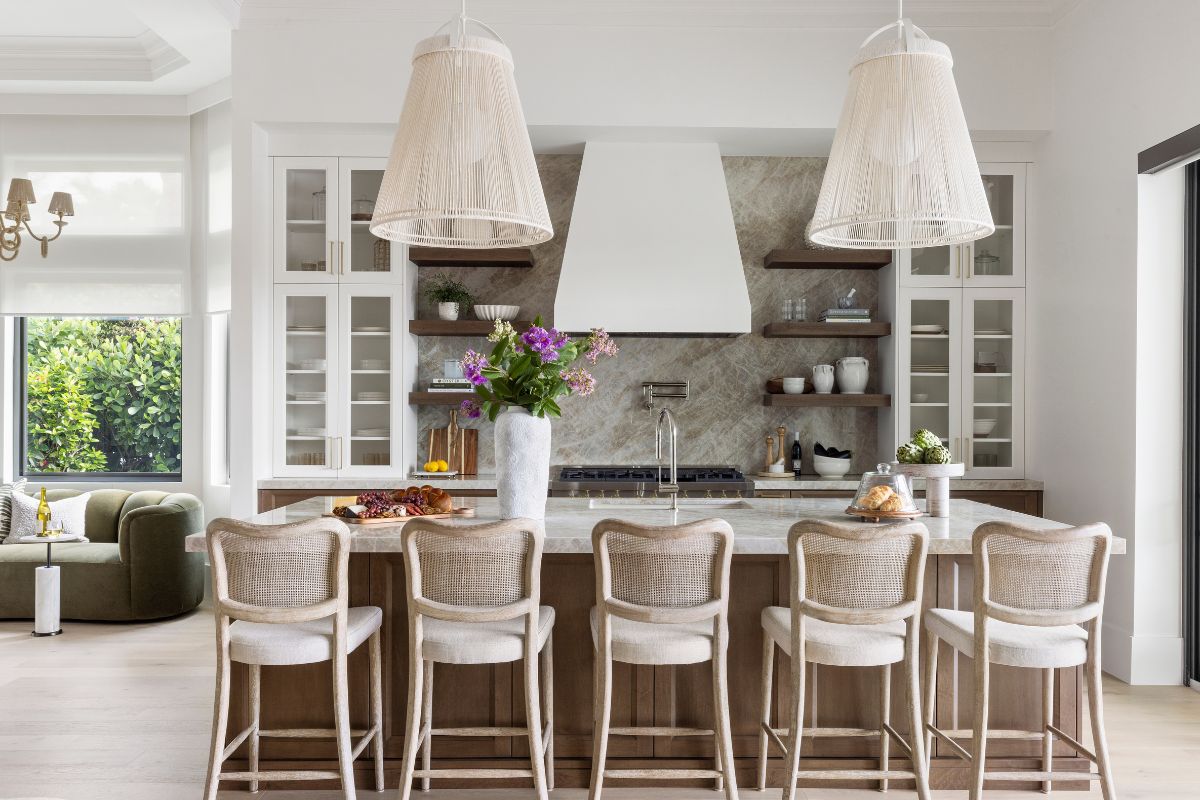
Quartzite countertops are natural stone, not engineered quartz. That point matters because people mix them up all the time. Quartzite starts as sandstone and transforms under heat and pressure into an extremely hard stone with soft, often marble-like movement.
Quartzite countertops are one of the best kitchen countertop materials when you want the beauty of natural stone but need better performance than marble typically gives.
In Palm Beach kitchens, quartzite makes a lot of sense for bright, airy spaces where homeowners want something elegant but not overly delicate.
Pros of Quartzite Countertops
Extremely hard and scratch-resistant
Better acid and etch resistance than marble
Strong heat resistance
Natural slab variation gives a high-end look
Performs well in sunny kitchens without resin-related yellowing concerns
Cons of Quartzite Countertops
Needs sealing to maintain stain resistance
Usually costs more than granite and many quartz options
Fabrication is more demanding, so skilled installers matter a lot
Premium slabs and detailed cutouts can push pricing up quickly
Quartzite Countertop Cost In Palm Beach, FL
Typical planning range: about $100 to $170 per sq ft installed
Premium or exotic quartzites can run higher than $170 per sq ft
4. Marble Countertops
Best for design-led kitchens, lighter-use zones, and homeowners who are comfortable with natural patina.
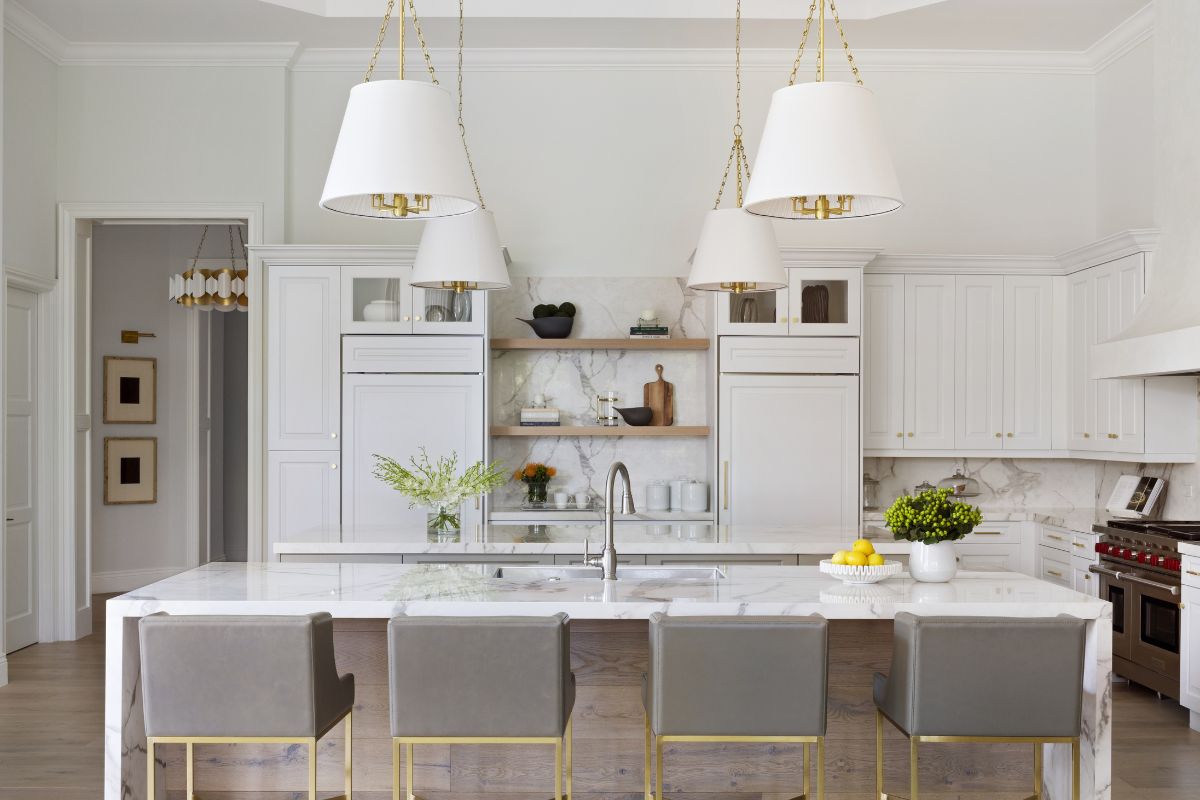
Marble countertops are natural metamorphic stone known for soft veining, a cool touch, and that unmistakable classic look. They’re still one of the best countertops for kitchens visually, but they are not the least demanding option. That is the tradeoff.
There is a reason marble keeps showing up in dream kitchens. It has depth and movement that engineered materials still struggle to fully replicate.
But it will etch, it can stain, and it asks more from you. For some homeowners, that patina is part of the charm. For others, it becomes a regret.
Pros of Marble Countertops
Timeless, elegant look with natural veining
Naturally cool surface, great for baking
Heat-tolerant compared with many non-stone surfaces
Can sometimes be cost-competitive with higher-end quartz
Adds a strong sense of design value and character
Cons of Marble Countertops
Softer surface scratches more easily
Acidic foods and drinks can etch the finish
Needs sealing and more careful day-to-day use
More vulnerable to visible wear in busy kitchens
Usually not the best choice for a zero-maintenance household
Marble Countertop Cost In Palm Beach, FL
Practical planning range: about $120 to $180 per sq ft installed
Premium marble slabs can go well above $180 per sq ft
5. Butcher Block Countertops
Best for islands, accent zones, and homeowners who want warmth and are okay with upkeep.
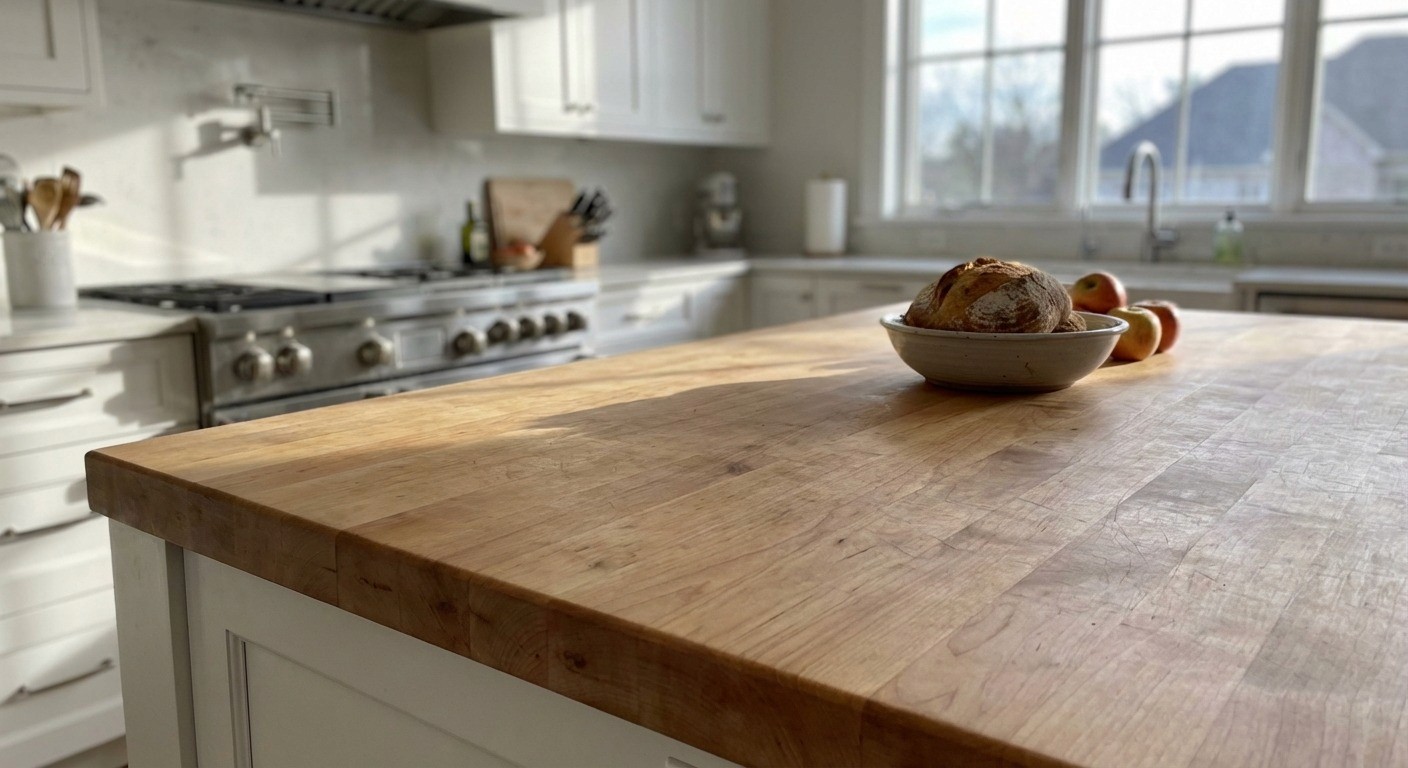
Butcher block countertops are made from laminated hardwood strips, usually maple, walnut, oak, birch, or teak. They bring warmth, softness, and texture to a kitchen in a way stone really cannot – it feels more lived-in, less polished, and sometimes more inviting.
That said, butcher block is not one of the best countertops for kitchens if your goal is maximum durability with minimum maintenance. It works best when you understand what it is. It is a wood surface (it will dent, it can stain, and around sinks it needs extra care).
Where it really shines is on islands, accent runs, and kitchens where warmth matters as much as performance.
Pros of Butcher Block Countertops
Adds warmth and natural texture
Softer on dishes and more comfortable for prep work
Can often be sanded and refinished instead of replaced
Knife-friendly compared with stone surfaces
Works beautifully as an island or secondary prep zone
Cons of Butcher Block Countertops
Sensitive to moisture, especially near sinks and dishwashers
Can stain, dent, scratch, and burn more easily than stone
Needs regular oiling or resealing depending on finish
High humidity requires more vigilance
Usually not the best whole-kitchen choice for busy households
Butcher Block Countertop Cost In Palm Beach, FL
Practical planning range: about $70 to $130 per sq ft installed
Premium woods and custom details can exceed that range
6. Soapstone Countertops
Best for character-rich kitchens, traditional or coastal homes, and homeowners who like a softer patina over time.
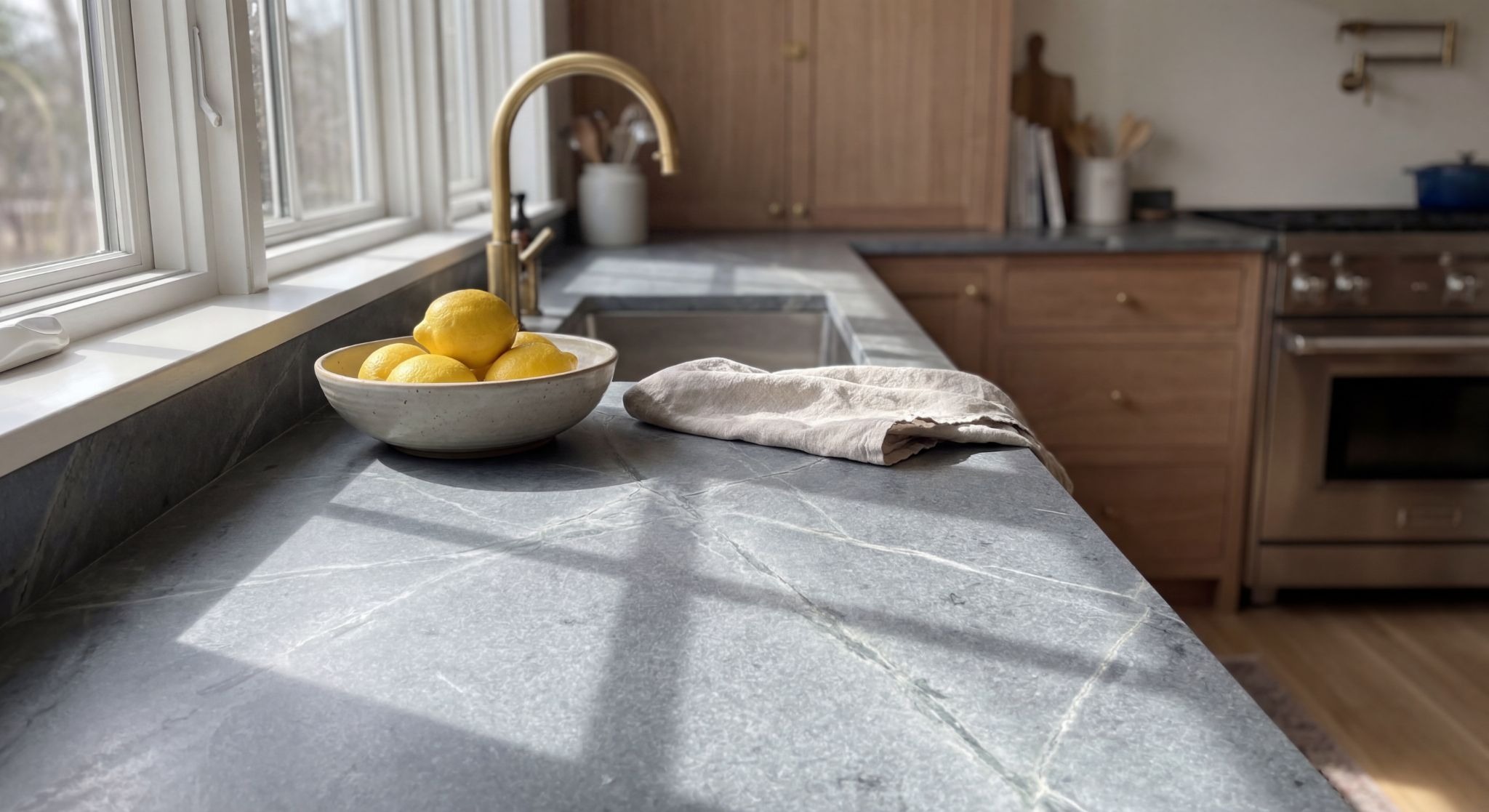
Natural stone made mostly of talc plus other minerals like magnesite and chlorite. Soapstone countertops have a silky feel, deep gray tones, and a softer matte presence that looks very different from polished quartz or granite.
Soapstone is a bit of a niche choice, but a good one. It is non-porous, naturally stain-resistant, and incredibly heat tolerant.
The tradeoff is that it is softer, so it scratches and develops patina over time. For the right kitchen, that aging is exactly the point.
Pros of Soapstone Countertops
Naturally non-porous, so no sealing is needed
Highly resistant to stains and acids
Excellent heat resistance
Easy to clean and naturally hygienic
Small scratches can often be buffed or sanded out
Cons of Soapstone Countertops
Softer surface scratches more easily than granite, quartzite, or quartz
Color can darken unevenly as it ages or is oiled
Limited color palette compared with quartz and granite
Edges and corners can show wear with hard knocks
Not ideal if you want a pristine, high-polish look
Soapstone Countertop Cost In Palm Beach, FL
Typical planning range: about $70 to $120+ per sq ft installed
Compare Countertop Materials By What Matters Most In A Kitchen
Best Countertops For Durability
The best countertops for durability are quartzite and granite, with quartz close behind. These are the durable countertop options that make the most sense for hard-working kitchens.
Best Countertops For Low Maintenance
The best countertops for low maintenance are quartz and soapstone. Both are non-porous, require no sealing, and clean up easily after everyday use.
Best Countertops For Natural Stone Lovers
If real stone matters to you, the strongest choices are granite, quartzite, marble, and soapstone. The right pick depends on whether you prioritize toughness, veining, or patina.
Best Countertops For Heat Resistance
If heat resistance is the deciding factor, look first at soapstone, quartzite, and granite.
Best Countertops For Stain Resistance
For stain resistance, quartz and soapstone are the standouts. Granite and quartzite can also perform very well when properly sealed.
Best Countertops For Resale And Broad Appeal
If you want the safest, most broadly appealing option, quartz is still the front-runner in Palm Beach. Granite and quartzite are also strong choices depending on the look of the home.
What Is The Best Material For Kitchen Countertops Based On Your Priorities?
The best material for kitchen countertops really depends on what you care about most.
If you want the least hassle: Quartz, then soapstone
If you want the toughest surface: Quartzite, then granite
If you want natural stone: Granite for value, quartzite for a more elevated look
If you want the most luxurious look: Quartzite or marble
If you want warmth instead of stone: Butcher block
If you want character and patina: Soapstone or marble
If you want the most popular countertop material: Quartz
And honestly, that last one is popular for a reason – quartz fits how most people live.
Still Deciding Which Countertop Material Makes Sense?
We guide your kitchen remodel & help you choose materials that work.
Frequently Asked Questions
Do thicker countertops make a kitchen look more expensive?
Often, yes. Thicker slabs or mitered edges can make countertops feel more substantial and high-end. Many luxury kitchens use 2–3 inch visual thickness to create a stronger architectural presence, especially on islands.
What countertop edge profiles are most popular in modern kitchens?
Simple edges dominate most remodels today. Eased edges, straight edges, and subtle bevels are the most common because they look clean and work across styles. More decorative profiles like ogee edges appear less frequently in contemporary kitchens.
Are waterfall countertops worth the extra cost?
Waterfall edges can add strong visual impact, especially in open-plan kitchens where the island is a focal point. The tradeoff is cost, since they require additional slab material and more complex fabrication.
How long do kitchen countertops usually last?
Most stone and engineered countertops last 20–50 years or more when properly maintained. Materials like quartz, granite, and quartzite are especially long-lasting, while wood surfaces may need refinishing over time.
Conclusion
Choosing the best countertops for kitchens rarely comes down to a single “winner.”
Quartz tends to be the safest all-around choice because it is durable, easy to maintain, and widely available. Natural stones such as granite and quartzite appeal to homeowners who want authenticity and strong heat resistance.
Then there are materials chosen more for character than perfection, like marble, butcher block, or soapstone, which bring personality but require a bit more care.
If you are planning a kitchen renovation and want help choosing the right countertop within the bigger picture of your remodel, book a free discovery call. We review your layout and priorities to translate those choices into a clear, build-ready design scope.
Pricing Disclaimer
The pricing figures referenced in this article are derived from an 18-month trailing analysis of projects completed by reputable contractors using quality materials and industry-standard construction practices. These figures are intended for general informational purposes only. Market conditions, material costs, labor rates, and contractor availability can change rapidly, and Palm Club Design Group makes no representation or guarantee that the prices cited reflect current costs or will apply to any future project. Readers should obtain up-to-date quotations from qualified professionals before making any budgeting or planning decisions.


Thinking About a remodel?