Kitchen
What's The Best Material For Kitchen Countertops? Top 10 Compared
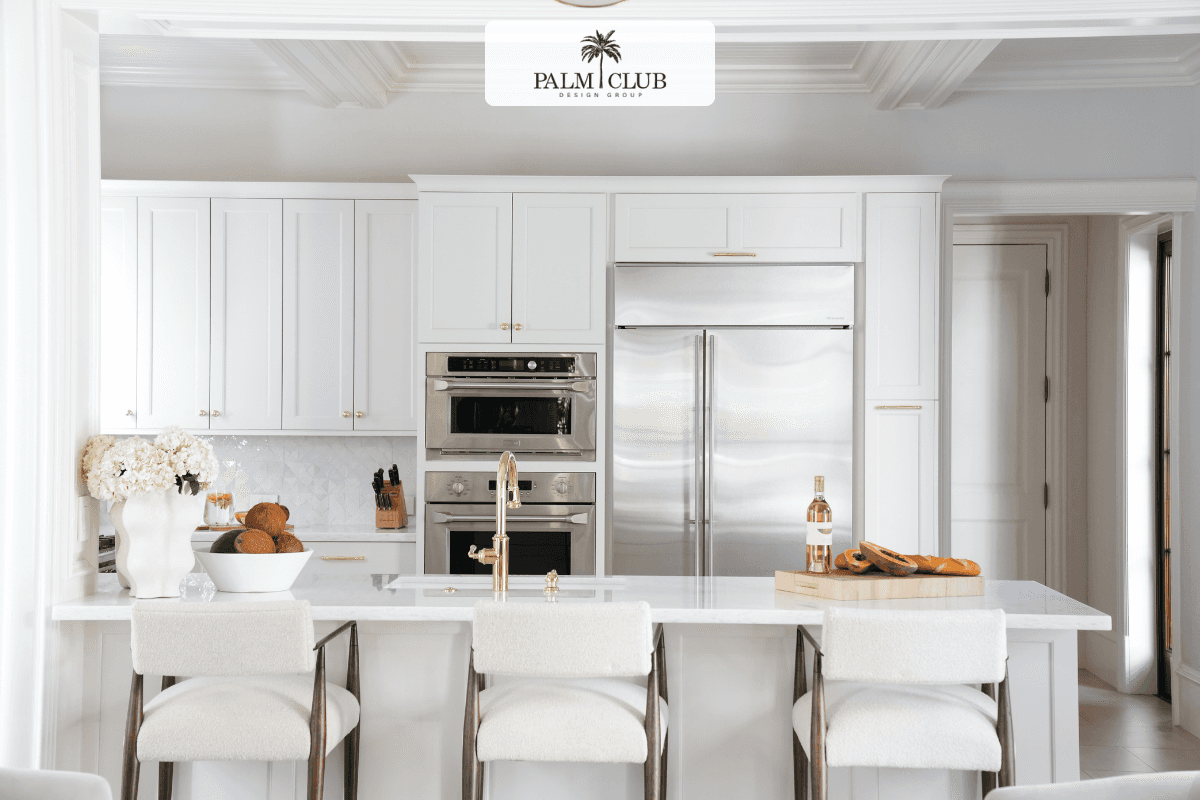
Countertops carry more weight in a kitchen remodel than people expect.
They anchor the design, influence how cabinets are built, affect appliance clearances, and quietly determine how forgiving the space feels day to day.
The material you choose will shape how your kitchen ages, how it handles heat and spills, and how much attention it asks from you.
We’ll compare the best material for kitchen countertops and break down how to choose the right one for your remodel.
Key Notes
Heat resistance, stain resistance, and scratch tolerance vary significantly by material.
Quartz offers low maintenance; quartzite and granite outperform in heat durability.
Marble, soapstone, and wood develop visible patina with normal kitchen use.
Seam placement, edge profiles, and sink detailing impact long-term countertop performance.
Top 10 Kitchen Countertop Materials Compared
Each section below gives a practical overview, then a simple breakdown of countertop materials pros and cons.
1) Quartz Countertops (Engineered Stone)
Best for low-maintenance kitchens that need durability without sealing.
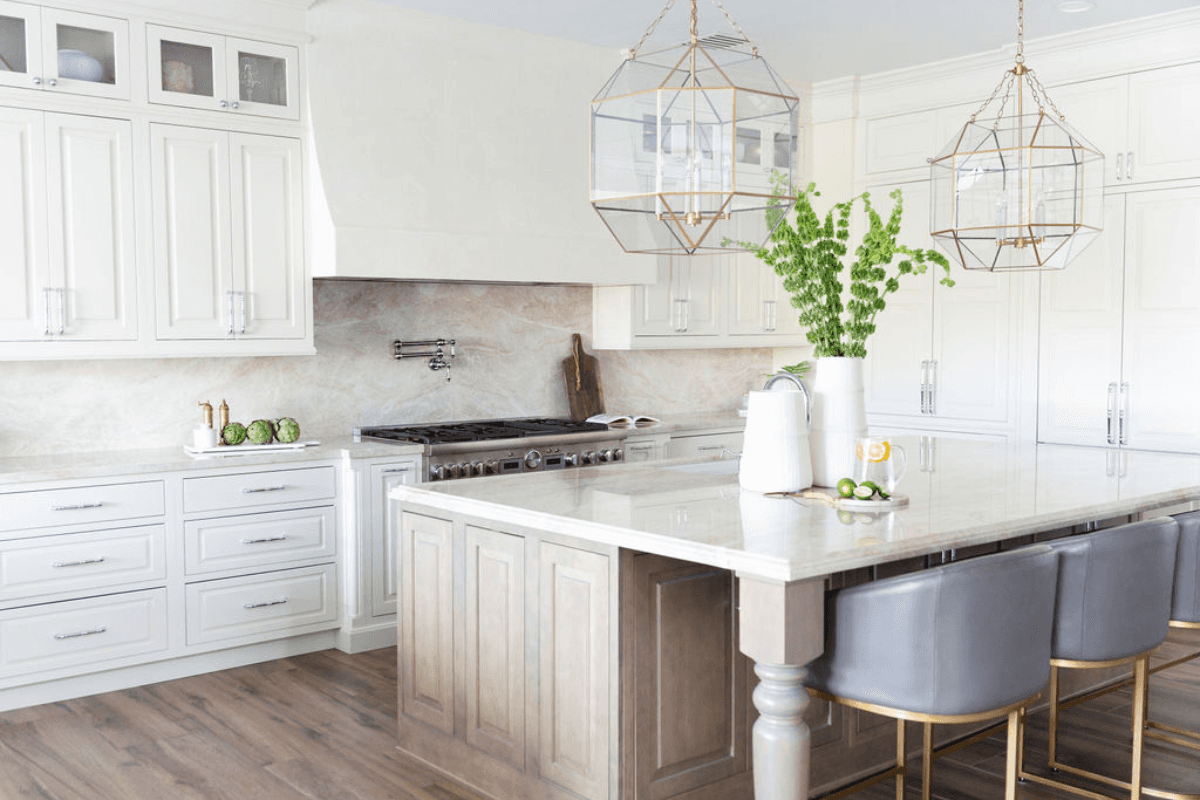
Quartz (engineered stone) is a man‑made countertop slab composed of roughly 90% to 95% crushed natural quartz plus 5% to 10% resins and pigments. It’s pressed and cured into dense, non‑porous slabs. The big practical win is that quartz countertops are stain resistant and don’t need sealing.
Quartz is popular because it’s consistent. You can get a clean white, a bold marble-look vein, concrete vibes, warm neutrals, and a lot in between, with less slab-to-slab surprise than natural stone.
For many homeowners, quartz is the most “set it and forget it” answer to the best material for kitchen countertops question.
Features
Engineered slab: quartz crystals bound with polymer resins and pigments
Non-porous surface that resists moisture and bacteria
Usually available in 20 mm and 30 mm thicknesses
Wide range of colors and patterns, including marble-look veining
Pros
Very stain-resistant and hygienic for daily cooking
No sealing required, simple cleaning with mild soap
Strong scratch resistance in normal use
Consistent patterning helps with cohesive design
Cons
Heat is the weak link: resins can scorch or discolor
Many lines are not UV stable for bright sun or outdoor kitchens
Seams can be visible in large kitchens, especially with bold veining
Deep chips or burns can be difficult to repair invisibly
Practical tip:
If you use countertop appliances that throw heat (air fryer, toaster oven, pressure cooker), don’t park them directly on quartz. Use a heat mat and give the surface a break.
2) Granite Countertops
Best for serious cooks who want heat resistance and natural stone character.
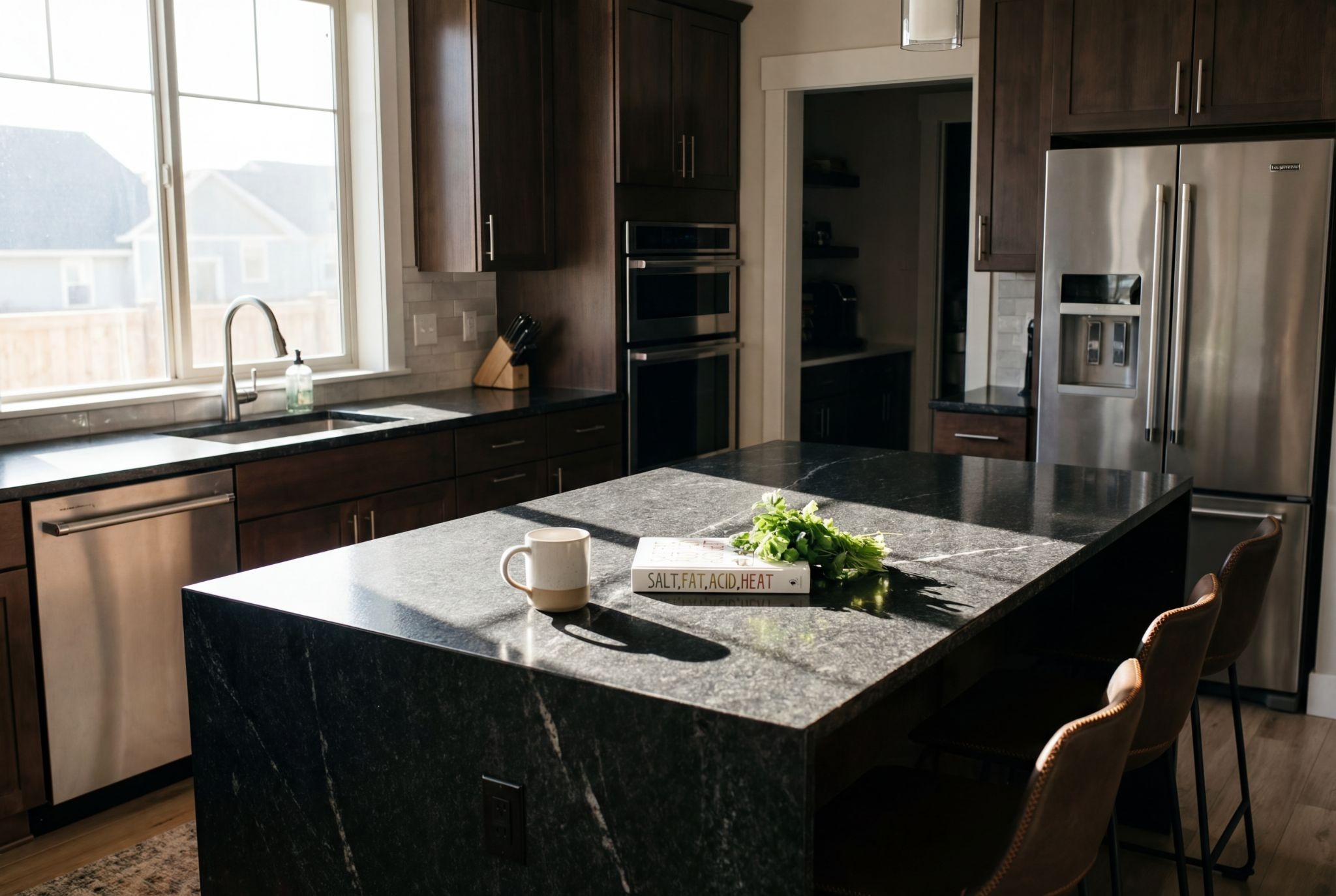
Granite is a natural igneous stone cut from quarries. It’s a classic for a reason: granite countertops handle heat extremely well, resist scratches, and hold up for decades when cared for properly.
If you cook a lot and you’re tired of babying surfaces, granite is usually in the top tier of best countertops for kitchen performance.
Granite does require sealing. Not constantly, but it’s not optional forever either. Granite is less porous than many stones, but it can still absorb oils and pigments if you let sealing lapse or spills sit.
Features
Natural stone made of quartz, feldspar, and mica
Typically fabricated around 30 mm thickness
Finishes include polished, honed, and leathered
UV-friendly compared to resin-based materials
Pros
High heat tolerance (hot pans are less scary here)
Strong scratch resistance and good chip resistance in daily use
Natural movement makes each kitchen counter unique
Works well in bright kitchens and some outdoor settings (sealed)
Cons
Needs periodic sealing to protect against stains
Some granites vary a lot from slab to slab (you should view and tag)
Light stones can stain more easily if neglected
Sharp outside corners can chip if the kitchen is high traffic
3) Quartzite Countertops
Best for a marble look with far better scratch and heat performance.
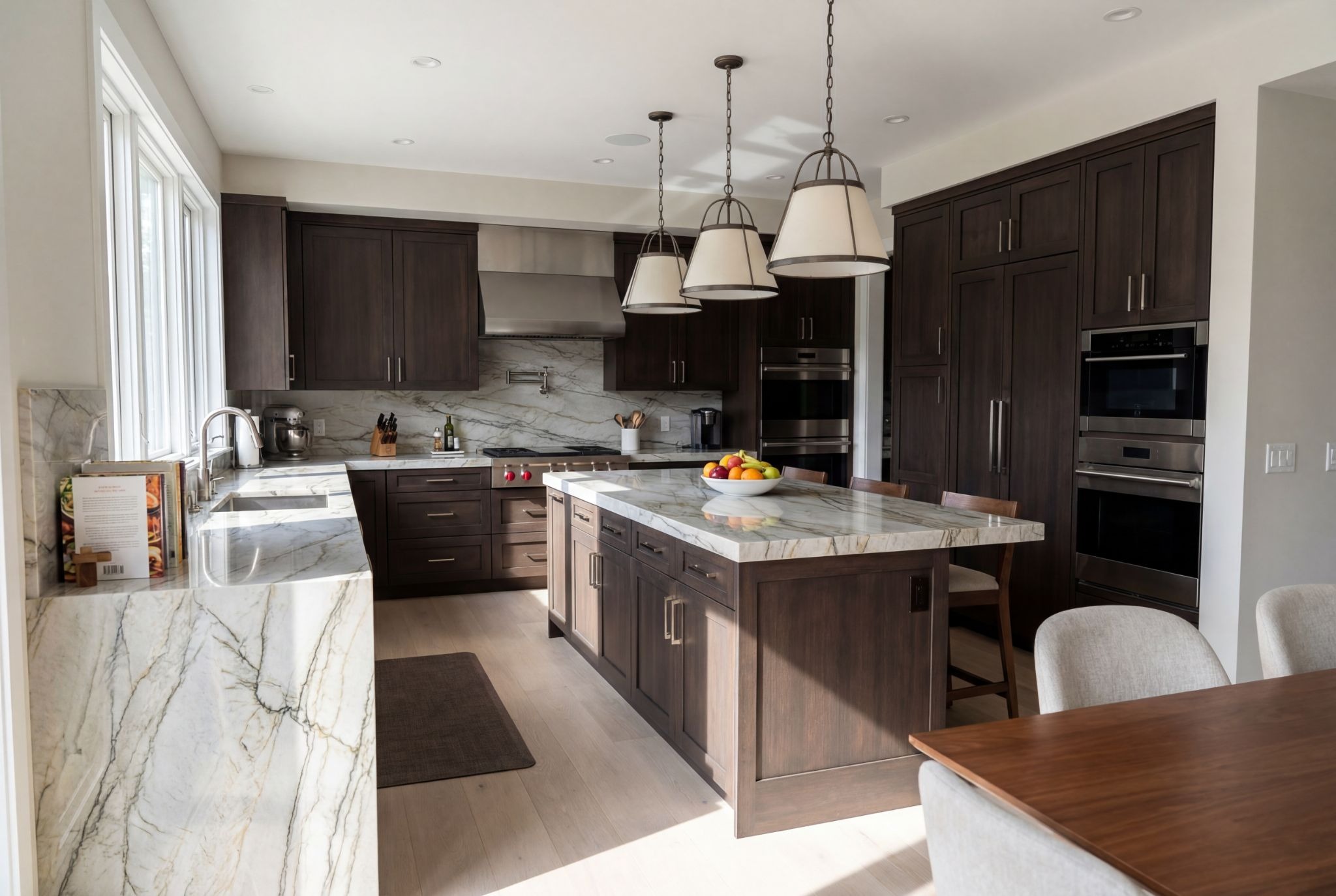
Quartzite is a natural metamorphic stone formed when quartz-rich sandstone is compressed and “baked” by heat in the earth.
True quartzite is extremely hard, often around 7 on the Mohs scale, which puts it in the running for the most durable countertop material among natural stones.
People choose quartzite when they want that bright, elegant, marble-like look but don’t want to deal with constant etching. Quartzite tends to resist acids far better than marble, and it’s very scratch-resistant.
The tradeoff is cost and the fact that not everything marketed as “quartzite” behaves like quartzite.
Features
Natural stone with high quartz content and high hardness
Often light-toned with soft veining and crystalline sparkle
Heat-resistant and UV-stable compared to engineered slabs
Still benefits from sealing (it’s natural stone)
Pros
Excellent scratch resistance and strong durability
Very good heat tolerance for busy cooking
Resists etching better than marble in normal kitchen use
Luxury look with natural slab uniqueness
Cons
Fabrication can cost more because it’s so hard
Needs sealing and sensible spill cleanup
Slab variation means you should view and tag
“Soft quartzite” mislabels can behave more like marble
4) Marble Countertops
Best for timeless elegance if you’re comfortable with visible patina.
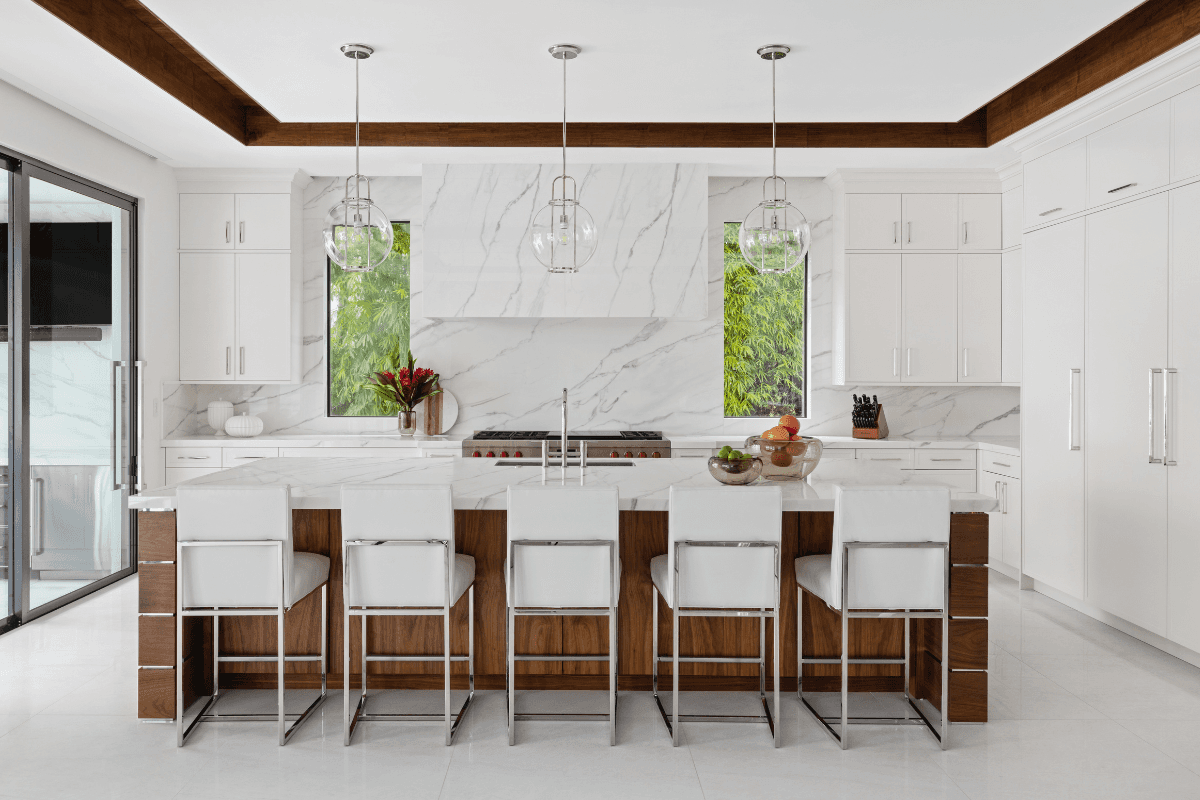
Marble is a natural metamorphic stone made mostly of calcite or dolomite. It’s iconic because the veining and depth are hard to replicate.
But marble is also the material where expectations matter most. If you want marble to stay pristine, marble will disappoint you. Marble reacts with acids. Lemon juice, vinegar, wine, tomato sauce, and even some sodas can cause etching.
Sealing helps with stains, but sealing does not stop etching because etching is a chemical reaction with the stone.
Features
Softer natural stone (roughly 3–4 Mohs)
Porous and acid-reactive
Polished finish shows etches more; honed hides them better
Needs regular sealing in kitchens
Pros
Unmatched classic look, especially in white and gray stones
Cool surface that bakers love for dough work
Patina can feel warm and “European” if you like a lived-in finish
Cons
Etches easily with everyday acidic foods and drinks
More scratch and chip-prone than granite, quartzite, or quartz
Higher maintenance and occasional refinishing if you want it looking sharp
Not ideal for outdoor use or aggressive daily abuse
Reality check:
Marble is fantastic for an island in an entertaining kitchen, or a baking zone where you’re disciplined. It’s tougher to recommend as the main perimeter counter in a family workhorse kitchen.
5) Soapstone Countertops
Best for heat-heavy kitchens and homeowners who embrace wear.
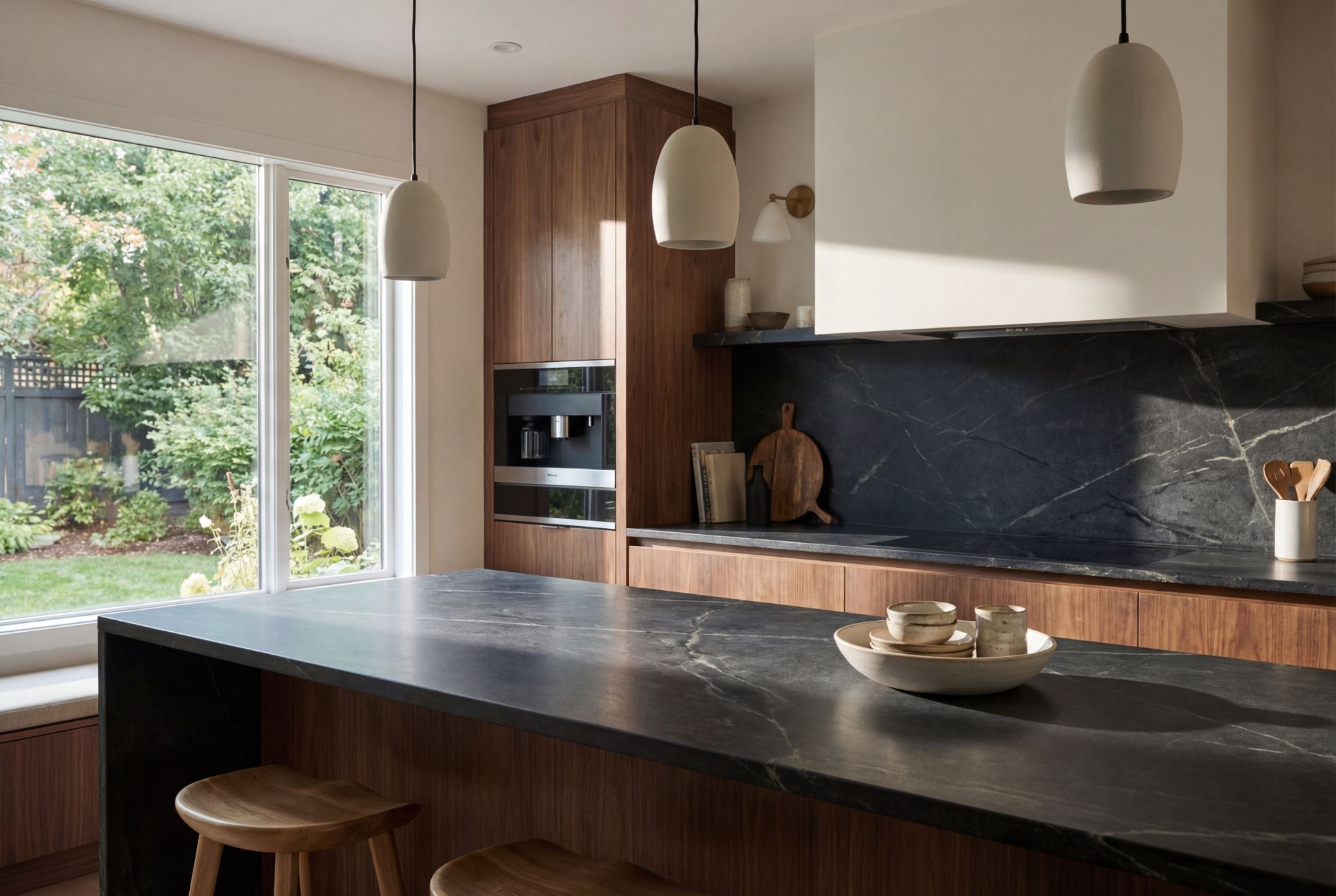
Soapstone is a natural metamorphic stone rich in talc and magnesite.
It’s one of the lowest stress countertop materials when it comes to heat and staining. It’s naturally non-porous, so it doesn’t need sealing. You can set hot cookware on it without panicking. That’s a rare combo.
The tradeoff is that soapstone is soft. It will scratch and dent. It will also darken over time, especially if you oil it (and even if you don’t).
Soapstone is for people who like patina and want function first.
Features
Dense, non-porous natural stone
Typically matte/honed feel with subtle veining
Darkens over time; oiling can even out the look
Extremely heat-resistant
Pros
Excellent heat tolerance and strong stain resistance
No sealing required
Easy DIY repair for scratches (light sanding + oil)
Soft, tactile feel that many people love
Cons
Scratches and dents are part of the deal
Limited color range (mostly grays/greens)
Patina can look blotchy if you dislike variation
Softer corners and edges are usually smarter to avoid denting
6) Stainless Steel Countertops
Best for chef-style kitchens focused on hygiene and heat tolerance.
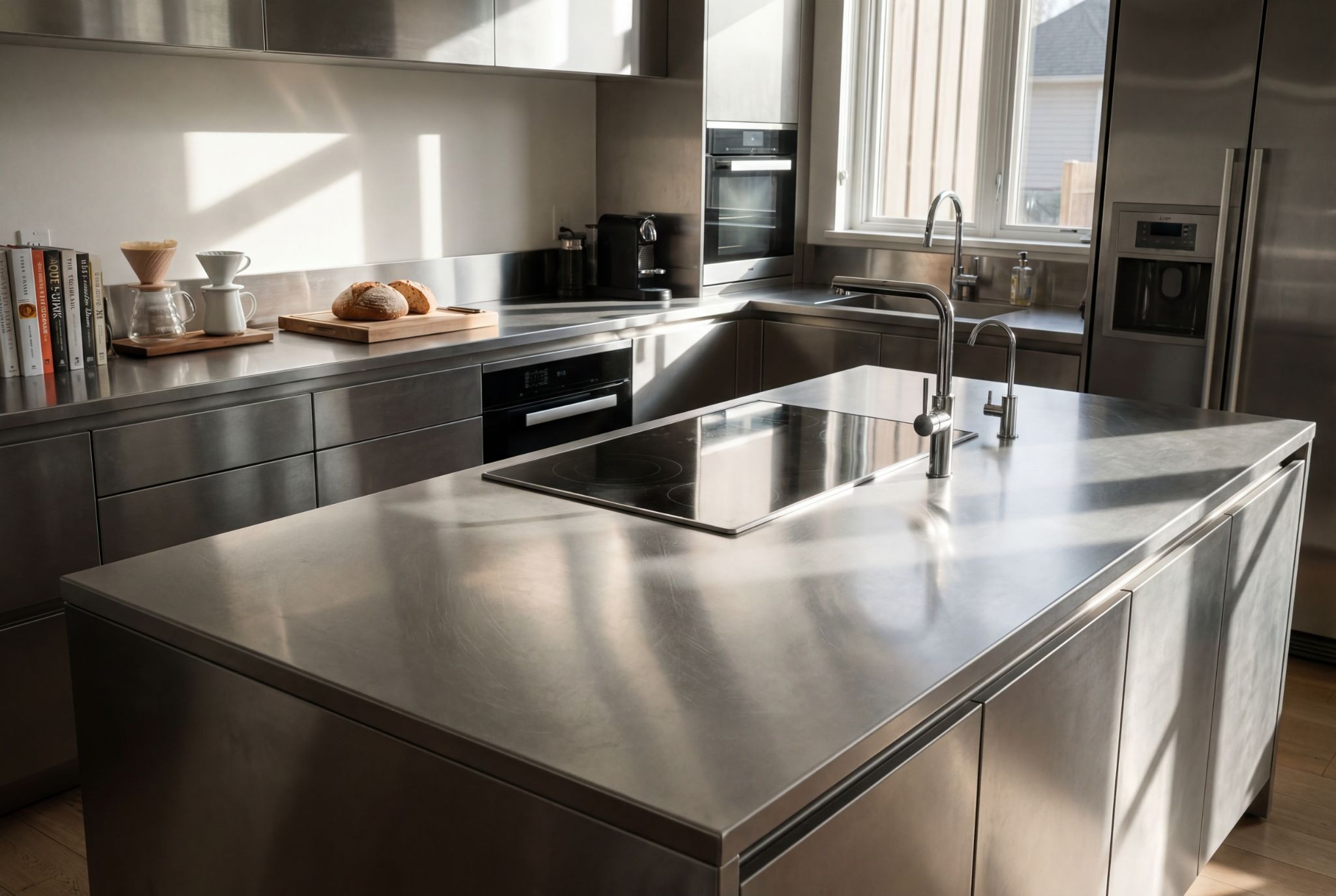
Stainless steel countertops are made from sheets of food-grade steel formed over a substrate, usually plywood.
It’s the ultimate non-porous prep surface. It’s why restaurants use it. It’s also one of the best materials for kitchen countertops if you cook hard and want a surface that won’t stain, chip, or crack.
The catch is cosmetic. Stainless scratches, and it shows fingerprints. Over time it develops a directional patina. Some people love that and call it character. Others see it as constantly looking “used.”
Features
Typically 16–18 gauge for residential countertops
Non-porous and highly hygienic
Can include integrated sinks and backsplashes
Heat and water resistance are top-tier
Pros
Very heat-resistant and stain-resistant
Easy to sanitize and great around sinks
No sealing and no risk of stone cracking
Integrated sinks make cleanup genuinely easier
Cons
Scratches are inevitable and dents can happen with heavy impacts
Fingerprints and water spots can show
Can feel “cold” visually without warm materials nearby
Noisy if the substrate is light or poorly built
7) Concrete Countertops
Best for fully custom shapes and bold architectural statements.
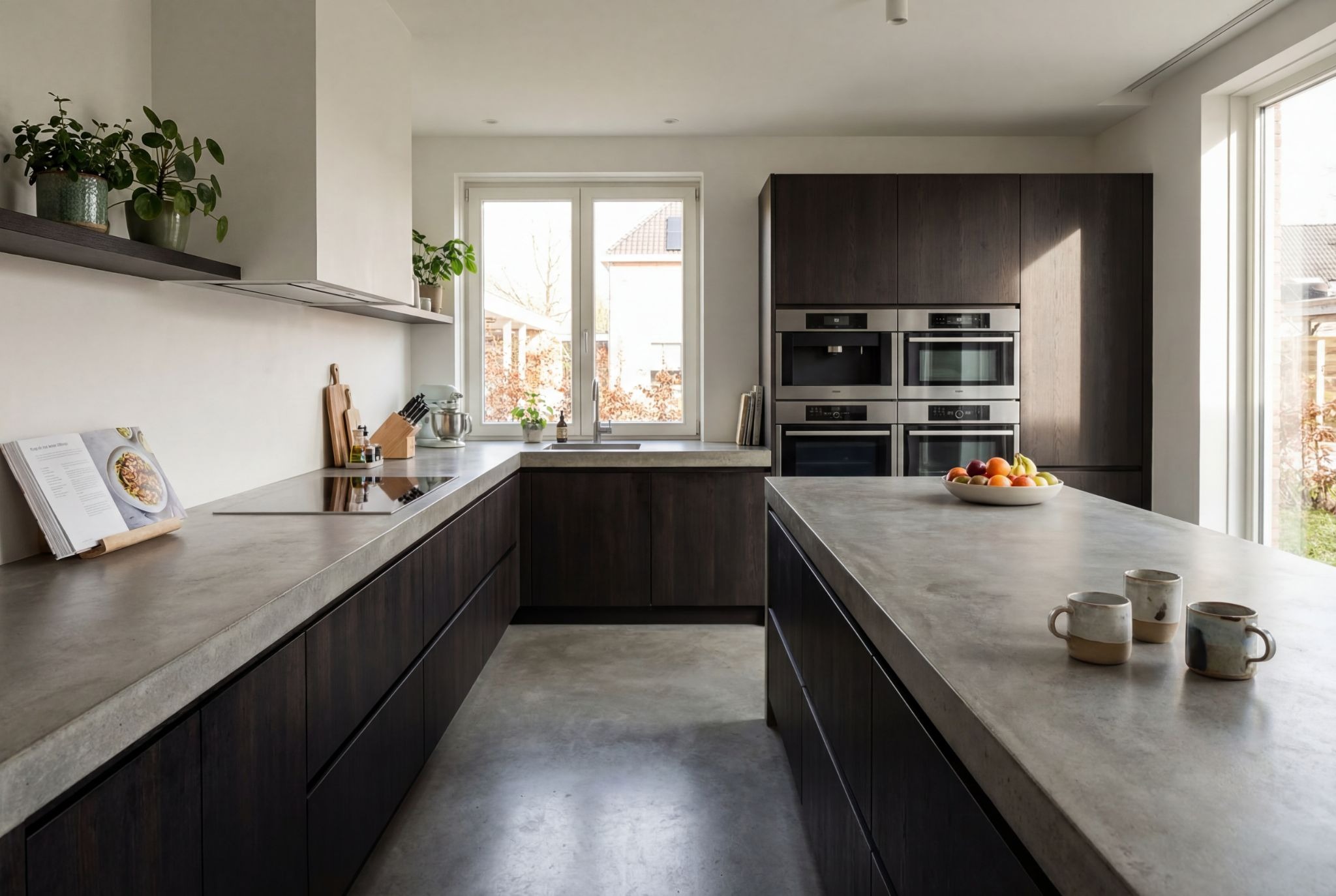
Concrete countertops are custom-cast cement-based slabs that can be tinted, shaped, and detailed in ways stone can’t. You can do integrated drain boards, custom thickness, embedded materials, and unusual shapes. If you want a truly custom kitchen counter that looks monolithic and architectural, concrete is the play.
But concrete is not “install it and forget it.” It needs sealing. Hairline cracks can happen. And depending on the sealer system, you may need periodic upkeep.
Features
Cement-based mix with reinforcement and admixtures
Cast in place or precast in a shop
Must be sealed to control staining
Highly customizable in color and detailing
Pros
Design flexibility is unmatched
Concrete itself handles heat well
Can feel high-end and unique when done by experienced fabricators
Long-term durability is possible with good detailing
Cons
Sealing and maintenance are required
Hairline cracking is common and may be visible
Can stain or show uneven wear if the sealer fails
Heavy and requires strong cabinetry and skilled installation
8) Solid Surface Countertops (Corian & Similar)
Best for seamless counters and integrated sink designs.
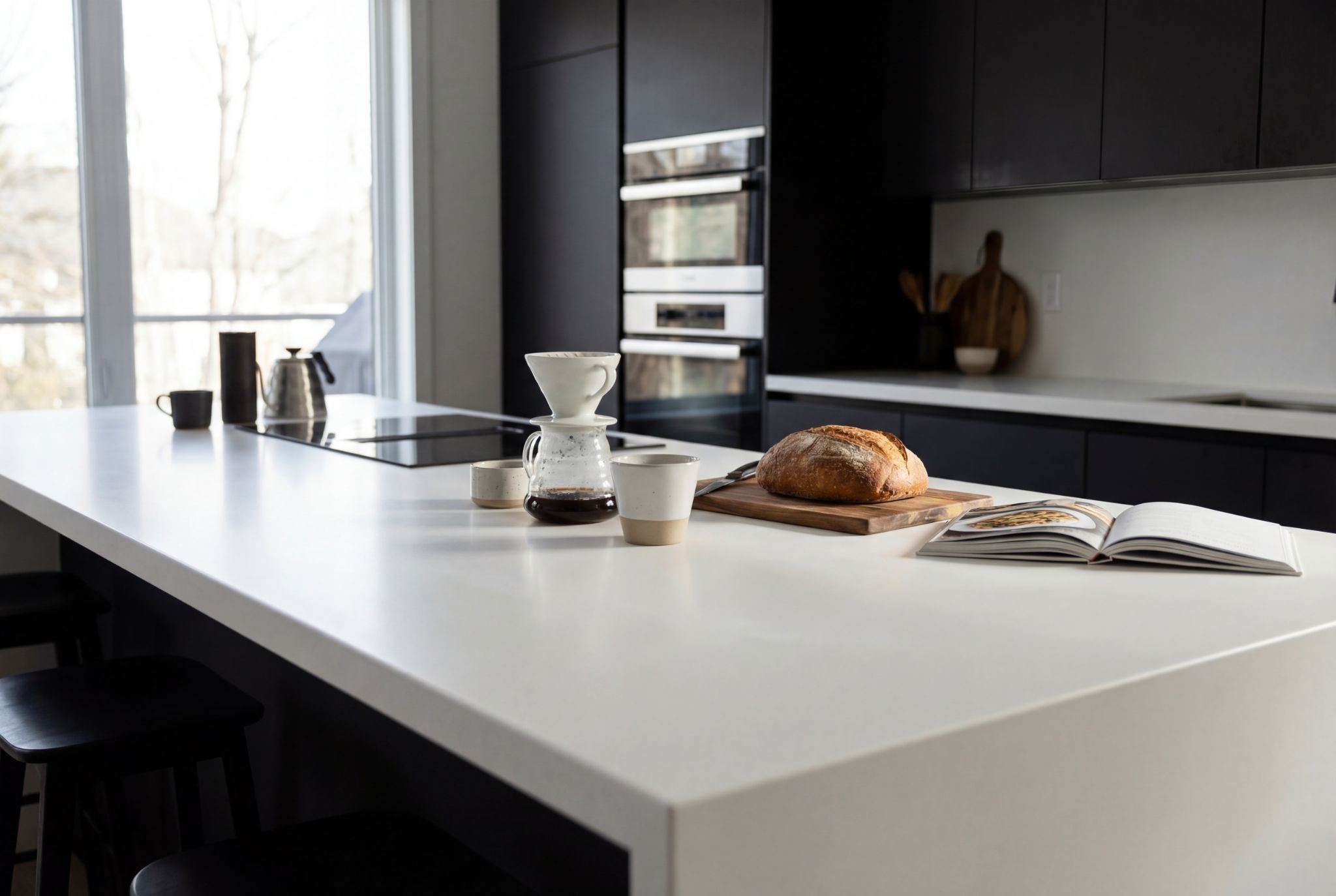
Solid surface is a man-made, non-porous material made from mineral fillers and acrylic or polyester resins.
The big advantage is seams. With solid surface countertops, long runs can be joined and sanded so seams are hard to see, and integrated sinks can be fabricated from the same material.
If your priority is “easy to clean, no grout, no sealing, no seams collecting stuff,” solid surface deserves more attention than it gets.
Features
Non-porous, homogeneous material throughout
Nearly invisible seams with proper fabrication
Allows integrated sinks and coved backsplashes
Matte/satin finishes are most practical
Pros
Very easy to clean and hygienic
Seamless look is excellent for busy kitchens
Repairable: scratches and some burns can be sanded out
Great for custom shapes and details
Cons
Heat-sensitive: trivets are mandatory
Scratches more easily than quartz or stone
Some people dislike the “plastic” feel compared to stone
Not ideal for strong outdoor UV unless specifically rated
9) Butcher Block Countertops
Best for warmth, softer prep zones, and easy refinishing.
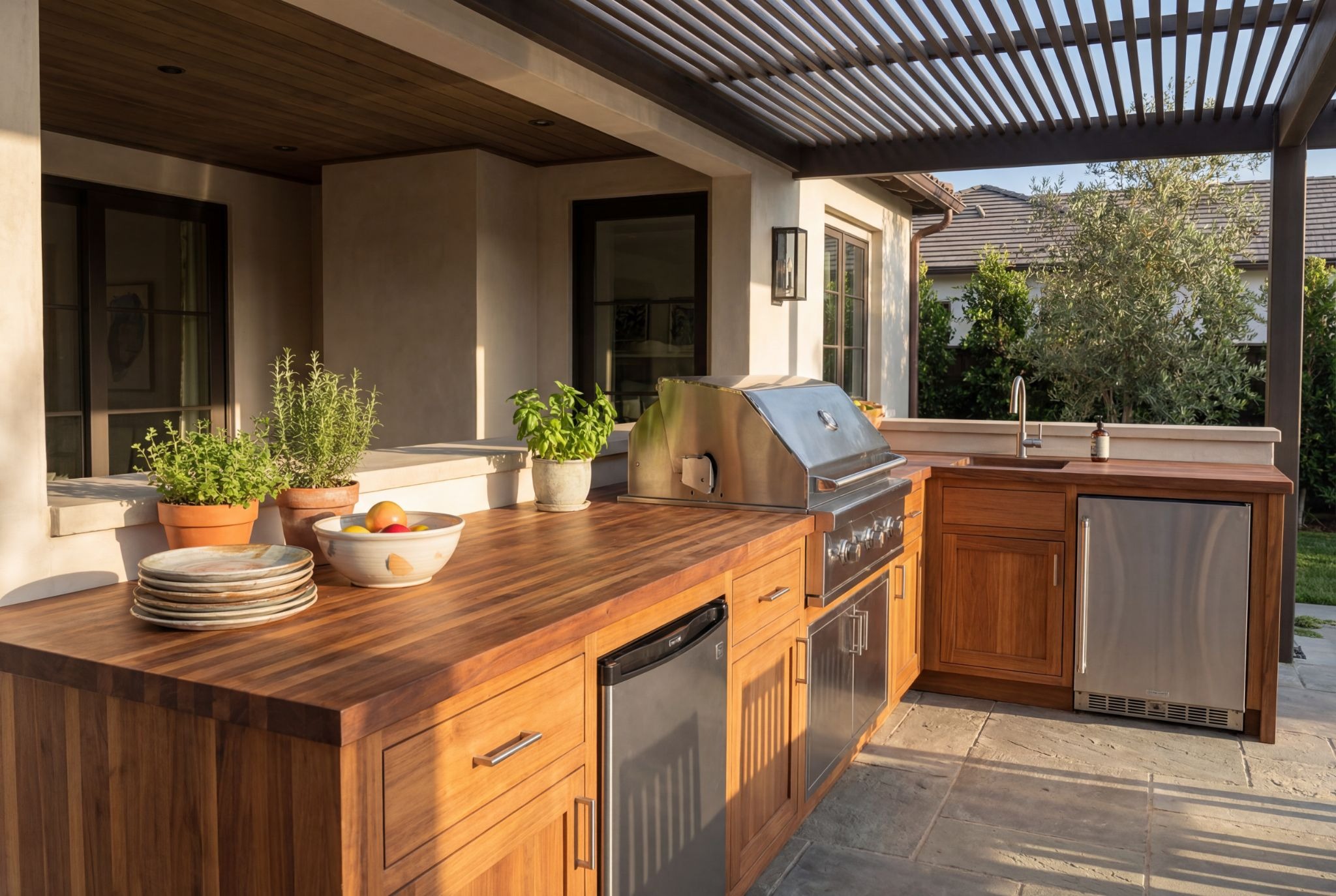
Butcher block is made from hardwood strips or blocks laminated together. It’s warm, quiet, and forgiving in a way stone never is. If you want your kitchen to feel less “hard,” butcher block is one of the best countertop materials for that.
But wood is also porous and moisture sensitive. It needs sealing and good habits around sinks and dishwashers.
Most homeowners who love butcher block use it strategically, like on an island, coffee bar, or baking zone.
Features
Hardwood construction (maple, walnut, oak, acacia, and more)
Face, edge, and end grain options
Finish can be oil/wax (cuttable) or film finish (more water resistant)
Can be sanded and refinished
Pros
Warm, natural look and comfortable feel
Repairable: sand and refinish instead of replacing
Quieter and gentler on dishes than stone
Great as a contrast material with stone perimeter counters
Cons
Requires sealing and ongoing care
Sensitive to standing water and wet zones
Scratches, dents, and dark water marks happen
Heat can scorch without trivets
10) TuffSkin Surface Protection
Best for homeowners who already love a soft natural stone and want it to behave like a harder one.
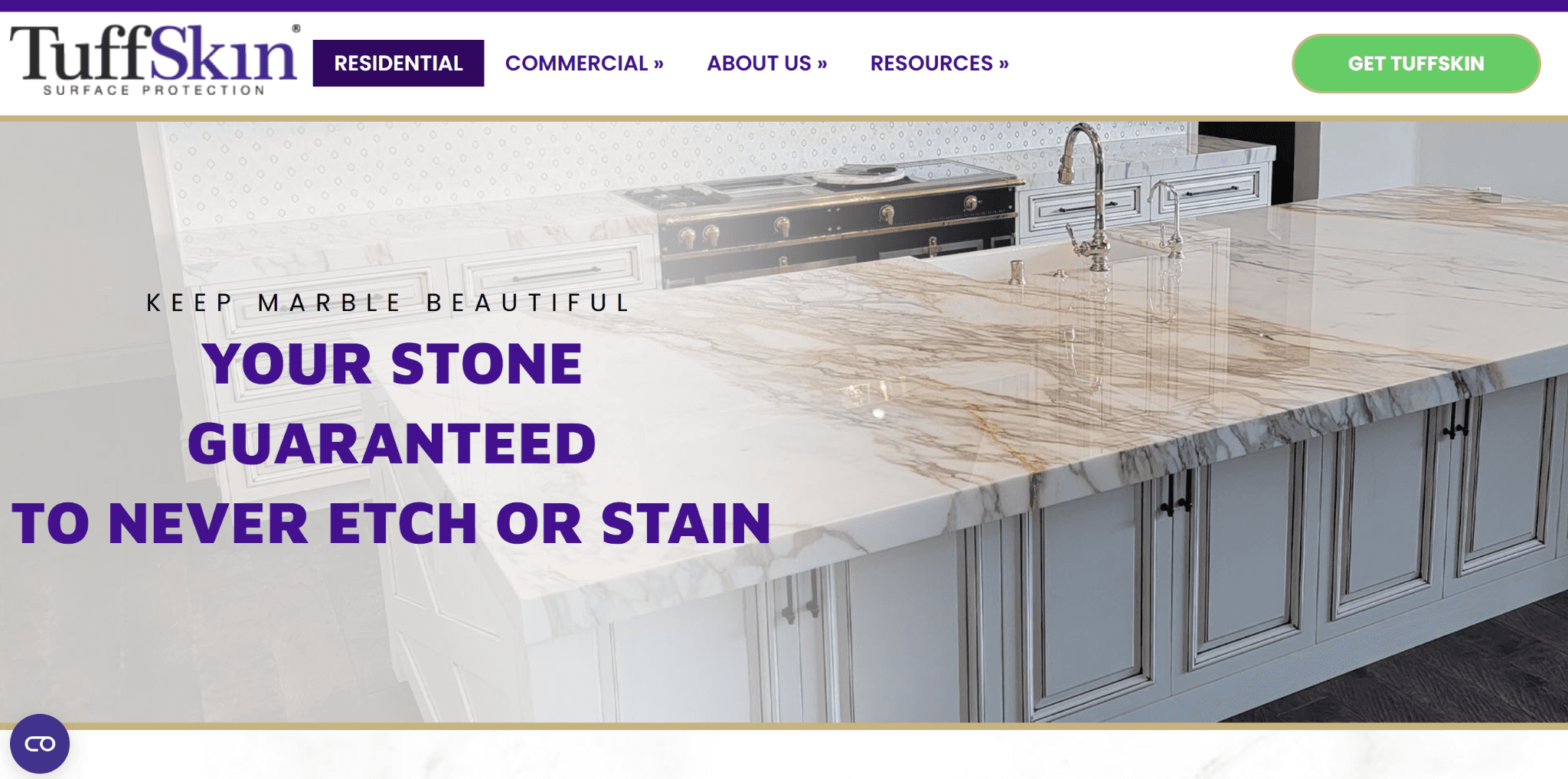
TuffSkin isn't a countertop material in the strict sense (it's a protective film applied over an existing stone surface).
We're including it here because for a lot of homeowners, the real question isn't which countertop should I pick, it's how do I get the stone I love without the daily stress that comes with it. TuffSkin solves that question directly, which is why it earns a spot on this list.
The product itself is a clear, gas-permeable polyester laminate bonded to your stone with a removable-and-replaceable adhesive. It creates a physical barrier between the stone and everything you put on it. Wine, citrus, oil, coffee, toothpaste – the things that would normally etch or stain marble simply don't reach the surface underneath.
Features
Polyester film bonded to stone with stone-specific adhesive
Gas-permeable, liquid-impermeable construction
Hard-coat technology for scratch resistance
10-year etch and stain warranty
Removable and replaceable without damaging the stone
Pros
Effectively eliminates etching and staining on protected surfaces
Lets you use soft, design-forward stones in real cooking kitchens
Heat-resistant up to 400°F for normal kitchen use
UV inhibitor protects clarity and stone color over time
Replaceable, so it's a long-term maintenance solution rather than a one-shot treatment
Cons
Adds cost on top of the underlying stone
Requires professional installation
Damage to the film means replacing the affected sheet rather than spot-repairing
Practical Tip:
TuffSkin pairs especially well with marble in kitchens where the homeowner wants the look but doesn't want to live around etching. If you're choosing between marble with TuffSkin or quartzite without, weigh the long-term replacement cost of the film against the slab-cost difference of going straight to a harder stone.
Comparison: Best Kitchen Countertop Materials
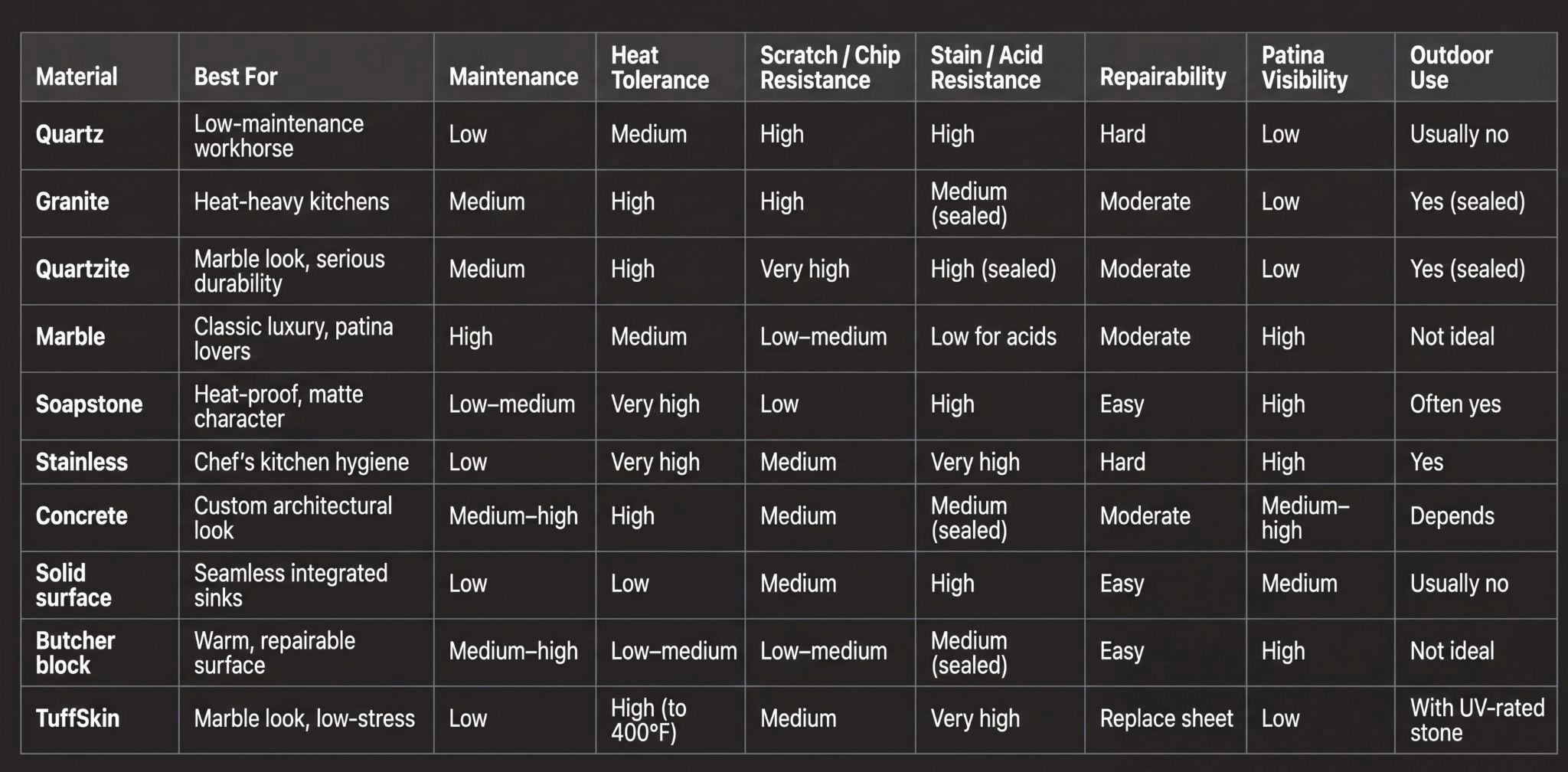
How To Choose The Best Material For Kitchen Countertops?
This is the part that gets you to a decision. The best material for kitchen countertops is the one that fits your priorities, not the one with the most hype.
Step 1: Define How You Cook
Start with reality.
If you cook hard (high heat, lots of pans moving, frequent mess), prioritize heat and scratch resistance. Granite, quartzite, stainless, soapstone, and concrete tend to behave better here.
If you cook lightly (reheating, simple prep, entertaining), you can trade performance for aesthetics or budget. Solid surface and even marble can work if you accept their quirks.
Your cooking style matters because many countertop disappointments come from heat habits, not stain habits.
Step 2: Decide Your Maintenance Band
Ask yourself what you will actually do:
If you want “set and forget,” go non-porous and no sealing: quartz, stainless, and solid surface.
If you’re fine with some routine, natural stone is open: granite, quartzite.
If you’re okay with patina and occasional refinishing, you can include soapstone, butcher block, concrete, and marble.
If you love a softer stone but want it to behave better, TuffSkin protection turns marble or onyx into a low-maintenance surface in practice.
Step 3: Rank The Durability Types That Matter To You Most
Durability isn’t one thing. It’s heat, scratches, stains, and chips.
Heat first: soapstone, stainless, granite, quartzite, concrete.
Stain and hygiene first: quartz, stainless, and solid surface.
Scratch and long-term wear first: quartzite, granite, quartz.
Chip risk and edge abuse: choose softer edges and better support no matter what you pick.
Step 4: Match The Look To The Real-Life Behavior Of Countertop Materials
This is where people get caught. The best material for kitchen counter visually isn’t always the best in day-to-day life.
Want natural stone variation? Granite and quartzite.
Want consistent, controlled patterns? Quartz and solid surface.
Want matte, quiet character? Soapstone and some concretes.
Want bright white with drama? Marble looks amazing, but the tradeoff is etching and patina.
Step 5: Budget & Lifecycle
If you plan to stay put…
👉 a higher durability surface can pay off in reduced frustration and fewer replacements.
If this is a short-term kitchen, or a rental…
👉 tile or a basic stone slab can be a smart move. A lower-cost countertop that you don't stress about can be the best decision in the room.
Step 6: Project Constraints That Quietly Decide Your Countertop Options
A few constraints push you toward certain types of kitchen countertops.
Long runs and minimal seams: solid surface can be a sleeper winner.
Outdoor or strong sun: avoid standard indoor quartz and many solid surfaces unless rated. Granite and quartzite are safer.
Heavy use around sinks: stainless, quartz, and solid surface are often the easiest.
Step 7: Shortlist 2–3 Best Kitchen Countertop Materials, Then Choose Your Tie-Breaker
For many kitchens, the shortlist looks like this:
Quartz vs granite vs quartzite for the main runs
Soapstone or stainless if heat tolerance is a daily pain point
Butcher block as a warm island accent if you like wood
Then decide based on the tie-breaker that matters most: local slab availability, fabricator quality, lead time, warranty, and repair reality.
Practical Countertop Tips
Seams: The Detail That Can Make Or Break Kitchen Countertops
Seams happen. The goal is planning them.
Busy granites hide seams better than clean, uniform patterns.
Bold quartz veining can either hide or highlight seams depending on how the vein flows.
Large islands need smart slab layout to avoid a seam right through the center.
If seams annoy you, talk about seam placement before fabrication begins, not after templates are already cut.
Edge Profiles & Corners Affect Countertop Durability More Than You Think
Sharp corners chip. That’s true for stone, quartz, and even wood edges that get dinged.
A small eased edge or a soft radius is usually the best “real life” edge. It looks clean, feels good, and performs better in busy walkways.
Sink Zones Are The Countertop Stress Test
Sink zones combine water, cleaners, cut-outs, and heavy daily use.
Seal and detail edges properly around sinks no matter the material.
Don’t store high-heat appliances where the counter gets cooked every day.
Be realistic about wood and grout in wet zones.
Cleaning Rules That Prevent Most Countertop Damage
You don’t need a complicated routine:
Use mild soap and water or pH-neutral cleaners on stone and engineered tops.
Avoid harsh abrasives on anything you care about.
Use trivets. Even “heat-resistant” surfaces appreciate good habits.
Unsure Which Countertops Fit Your Kitchen?
We’ll evaluate your vision & budget before you commit.
Best Material For Kitchen Countertops FAQs
How long do kitchen countertops typically last?
Natural stone like granite and quartzite can last 20–50+ years with proper care. Quartz and solid surface often last 15–30 years. Butcher block has a shorter lifespan that depends on wear and moisture exposure, though it can be sanded and refinished to extend its life.
Can I install new countertops on existing cabinets?
Yes, but only if your cabinets are structurally sound and level. Stone and concrete are heavy, so cabinet boxes must be strong and properly supported to prevent cracking or shifting over time.
Do countertops increase home resale value?
They can. Durable, neutral materials like quartz, granite, and quartzite tend to appeal to the widest buyer pool. Highly personal or high-maintenance materials may narrow appeal depending on the market.
Is TuffSkin worth it compared to choosing a more durable stone?
It depends on what you're after. If you specifically want marble (or another softer stone) and you'd rather not live with etching and patina, TuffSkin protects the look without changing the stone. If you're flexible on the visual and just want long-term performance, a harder stone like quartzite or granite may be the simpler path. Both are good choices for different priorities.
Conclusion
The best material for kitchen countertops is the one that fits how you cook, clean, and live.
Quartz earns its place when low maintenance matters most. Granite and quartzite handle heat-heavy kitchens with confidence. Marble and soapstone reward homeowners who welcome a bit of patina, and TuffSkin gives you a way to enjoy soft stones without their usual stress. Stainless, concrete, solid surface, and butcher block each have their moment when the priority is right.
The smartest choice usually comes down to honest tradeoffs: heat versus stains, durability versus character, upfront cost versus replacement timing.
If you're planning a remodel and want clarity on which material fits your kitchen, your budget, and your real day-to-day routine, book a free discovery call. We'll walk through your space, your priorities, and the tradeoffs that matter – before any of those decisions get expensive to undo.


Thinking About a remodel?