Kitchen
7 Best Kitchen Flooring Options Compared (2026)

There's no single best kitchen flooring – the right floor depends on how much you weigh water resistance, durability, comfort underfoot, and budget.
For most kitchens, and especially humid, slab-on-grade ones, porcelain tile and quality luxury vinyl plank lead the field because they shrug off spills and daily traffic with the least fuss.
The seven options below are the ones worth comparing, each judged on the same things so you can see where they differ.
Key Notes
Porcelain and quality LVP handle humidity, spills, and traffic with least maintenance.
Installed costs range widely, from roughly $3 to $47 per square foot.
Hard, non-porous floors like tile and concrete don't harbor allergens.
Best Kitchen Flooring – Quick Overview
Flooring | Water resistance | Durability (lifespan) | Comfort underfoot | Approx. installed cost |
Porcelain tile | Near-waterproof (seal grout) | Excellent (15–50 yrs) | Hard, cool | $8–20/sq ft |
Luxury vinyl plank | Water-resistant (seams a risk) | Good (15–20 yrs) | Soft, warm, quiet | $4–12+/sq ft |
Ceramic tile | Good (more porous) | Good (decades) | Hard, cool | ~$4–10/sq ft |
Waterproof laminate | Water-resistant | Fair (15–20 yrs) | Firm, fairly warm | ~$3–7/sq ft |
Engineered hardwood | Not waterproof | Good (20–30+ yrs) | Warm, forgiving | $8–14/sq ft |
Natural stone | Porous (seal regularly) | Excellent (decades) | Hard, cool | $8–47/sq ft |
Polished concrete | Slab stable; needs vapor barrier | Excellent (decades) | Hard, cool | $4–10/sq ft |
*Installed costs are planning-level ranges that shift with material grade, layout complexity, and local labor.
1. Porcelain Tile
Best for: Durability and water resistance in high-traffic, humid kitchens.
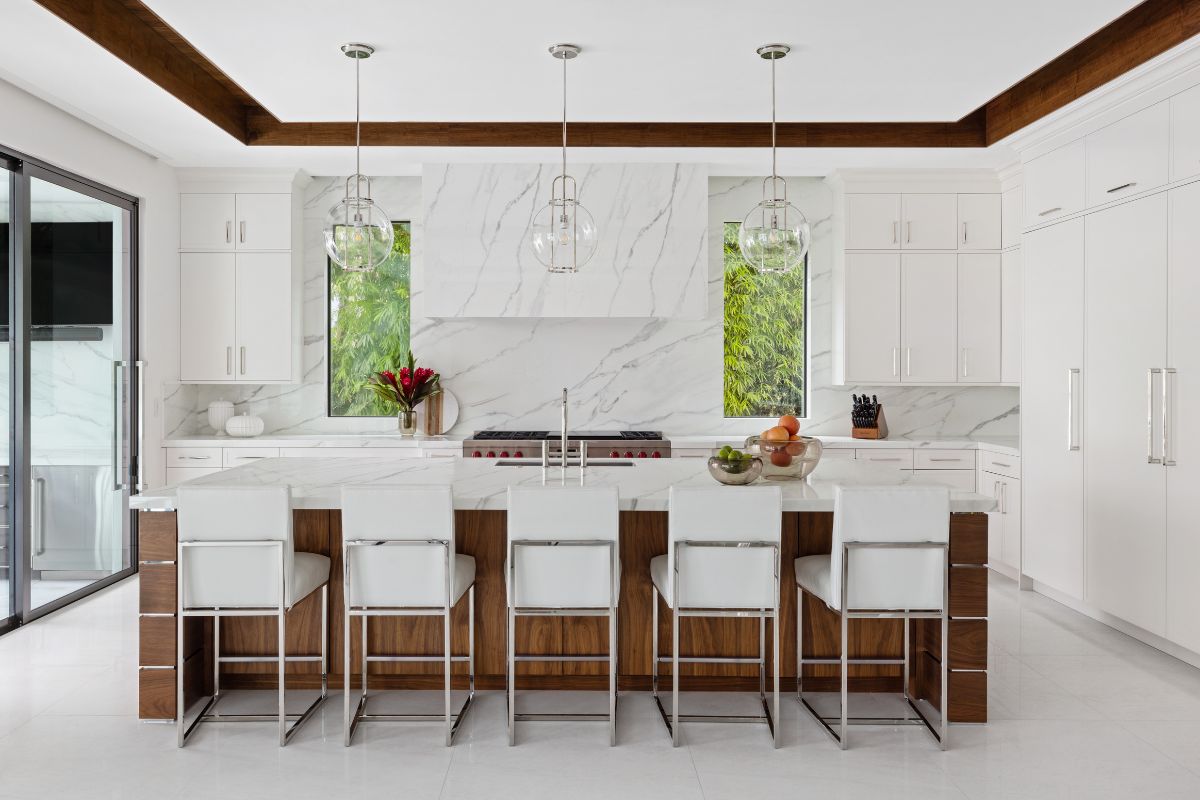
Porcelain tile is the closest thing to a do-everything kitchen floor, which is why it tops most shortlists for busy, humid homes. It's fired denser and harder than ordinary ceramic, with a water absorption rate of 0.5% or less – effectively waterproof at the tile itself.
The trade-off is that it's hard underfoot, heavier, and more demanding to install.
Near-zero porosity does the heavy lifting. The dense body won't swell, warp, or cup in humidity, and it resists wine, coffee, and oil stains – most spills just wipe up.
It handles abuse other floors flinch at. Dropped utensils, dragged chairs, pet claws, and gritty sand all bounce off a surface that can last anywhere from 15 to 50 years.
Finish choice matters more than people expect. Matte and textured tiles give better slip resistance for a working kitchen; polished, high-gloss porcelain looks luxe but turns slick when wet.
Pros:
excellent in wet and humid spaces
highly scratch- and stain-resistant
low daily maintenance (sweep and damp-mop)
Cons:
hard and cold underfoot
grout lines need periodic sealing
higher labor cost and a heavier, more complex install
2. Luxury Vinyl Plank (LVP)
Best for: Comfort, water resistance, and a mid-range budget.
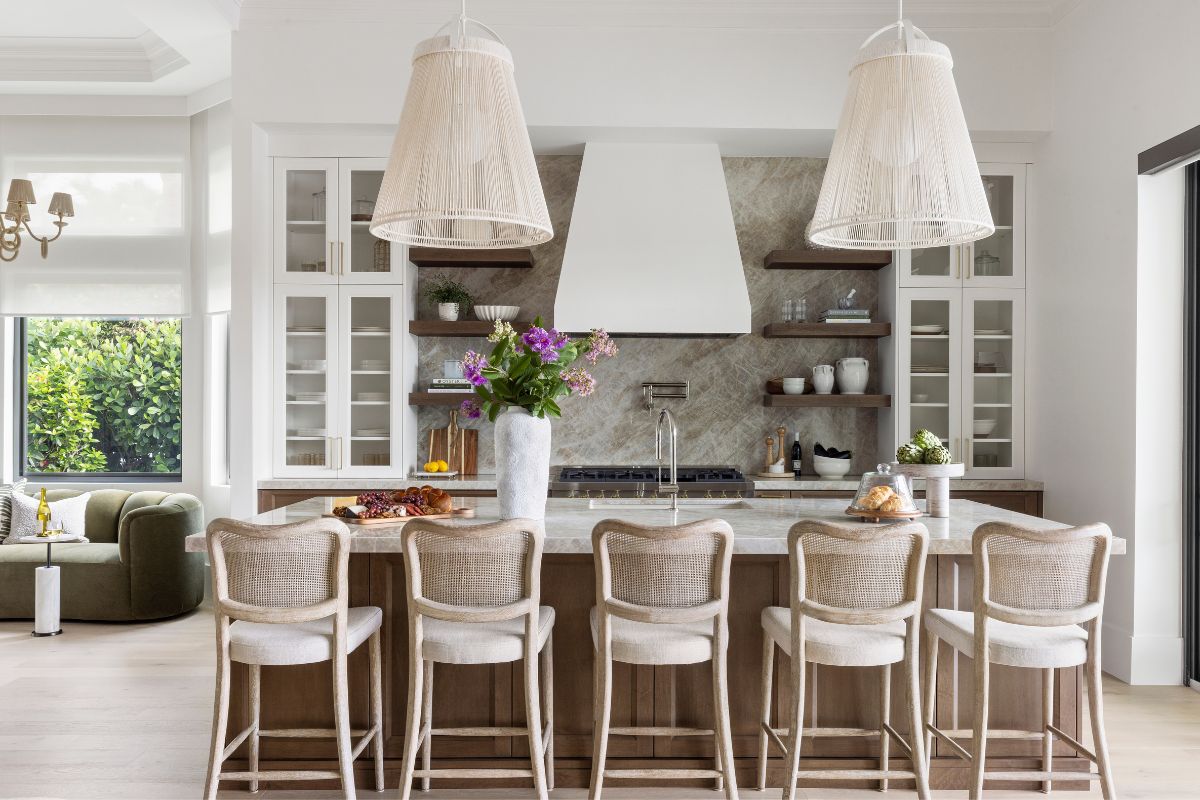
Luxury vinyl plank is the comfort-and-value pick – and it's become the default wood-look floor in spill-prone kitchens.
It's a multilayer plank (water-resistant core, printed wood or stone image, clear wear layer) that clicks together and often floats right over an existing hard surface. You give up some longevity versus tile, but you gain warmth, quiet, and an easier install.
It handles everyday kitchen spills well. Quality lines have water-resistant cores, so wiped-up spills and the occasional splash aren't a problem when it's installed right.
Water-resistant doesn't mean bombproof, though. Water can still get under the planks, where the core traps it against the subfloor and creates mold so LVP is best avoided in genuinely wet rooms like laundries and bathrooms.
Softer and warmer pays off during long cooking sessions. LVP has a little give and often a foam backing, so it's easier on your joints and quieter than any tile.
The wear layer is the spec that matters. Look for 20–30 mil for homes with pets and kids; that's what carries it to a typical 15–20 year lifespan.
Pros:
comfortable and low-maintenance, with no grout to scrub
noticeably warmer and quieter than tile
fast, often DIY-friendly install
Cons:
water can penetrate seams and get trapped beneath the planks
shorter lifespan than tile, so it's rarely a "forever" floor
can scratch from sharp objects and fade in strong direct sun
3. Ceramic Tile
Best for: A budget-friendly tile floor with huge design range.
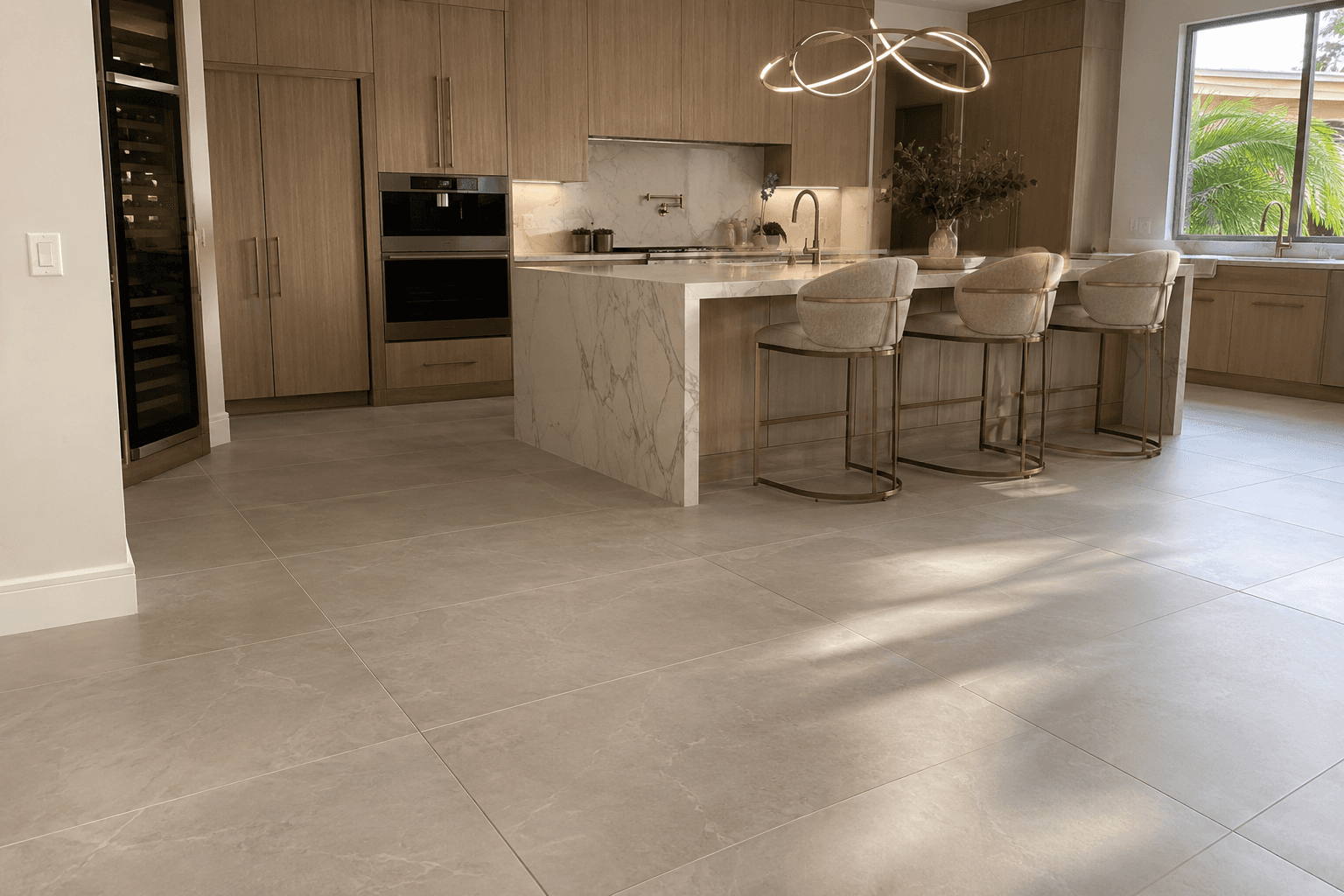
Ceramic tile is porcelain's lighter, more affordable cousin – the value play when you want a tile look without the porcelain price tag.
It's fired at lower temperatures from less dense clay, usually with a colored glaze on top, which makes it easier to cut and install but a touch more porous.
For light-to-moderate kitchen traffic, that's a perfectly sensible compromise.
The price gap is the headline. Basic ceramic can start under $1/sq ft in materials and is cheaper to set than porcelain, since it's easier on the installer's blade.
The design catalog is enormous. Modern printing mimics stone, concrete, and wood across a vast spread of colors and finishes – handy if you want matching wall and floor tile.
It's hygienic and heat-friendly. The glazed surface doesn't harbor dust or pollen, wipes clean, and is non-combustible, which is a quiet plus around the range.
Pros:
one of the most affordable kitchen floors
low daily maintenance
resists surface moisture and stains when glazed
Cons:
less dense than porcelain, so it chips or cracks more readily
hard and cool underfoot
grout and the more porous body may need sealing in humid kitchens
4. Waterproof Laminate
Best for: A firm, wood-like floor when real wood is out of budget or out of the question.
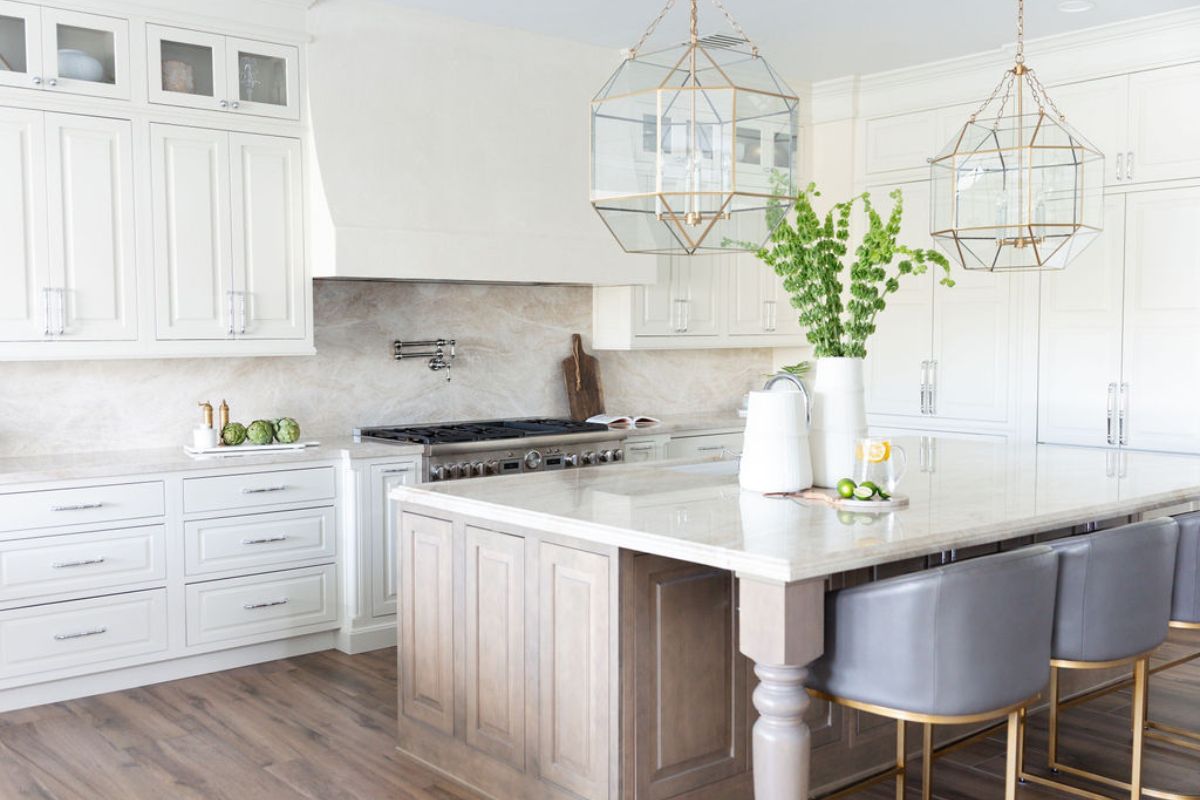
Waterproof laminate is the wood-look floor for a tighter budget, an upgraded laminate built to survive a kitchen better than the old stuff did. It pairs a treated high-density fiberboard core with sealed edges and a tighter click-lock to slow water from reaching the core.
While it is highly water-resistant, it is not bulletproof, so standing water is still the enemy.
Is laminate or vinyl plank better for a kitchen? It depends on what you want underfoot. Choose laminate for a stiffer, more authentic "board" feel and sound; choose LVP for maximum water tolerance and a quieter step.
It installs and lives easily. The floating click-lock system goes down over many existing floors with no glue or nails, and care is just sweeping and the occasional damp mop.
Know the two real limits going in. It can't be sanded or refinished – damaged boards get replaced – and quality laminate runs about 15–20 years, short of tile or hardwood.
Pros:
convincing wood look at a lower price than real wood
durable, scratch-resistant wear layer
DIY-friendly floating install
Cons:
prolonged standing water can still swell the core
no refinishing path
mid-room repairs can mean disassembling a chunk of floor
5. Engineered Hardwood
Best for: A real-wood look in a well-managed, climate-controlled kitchen.
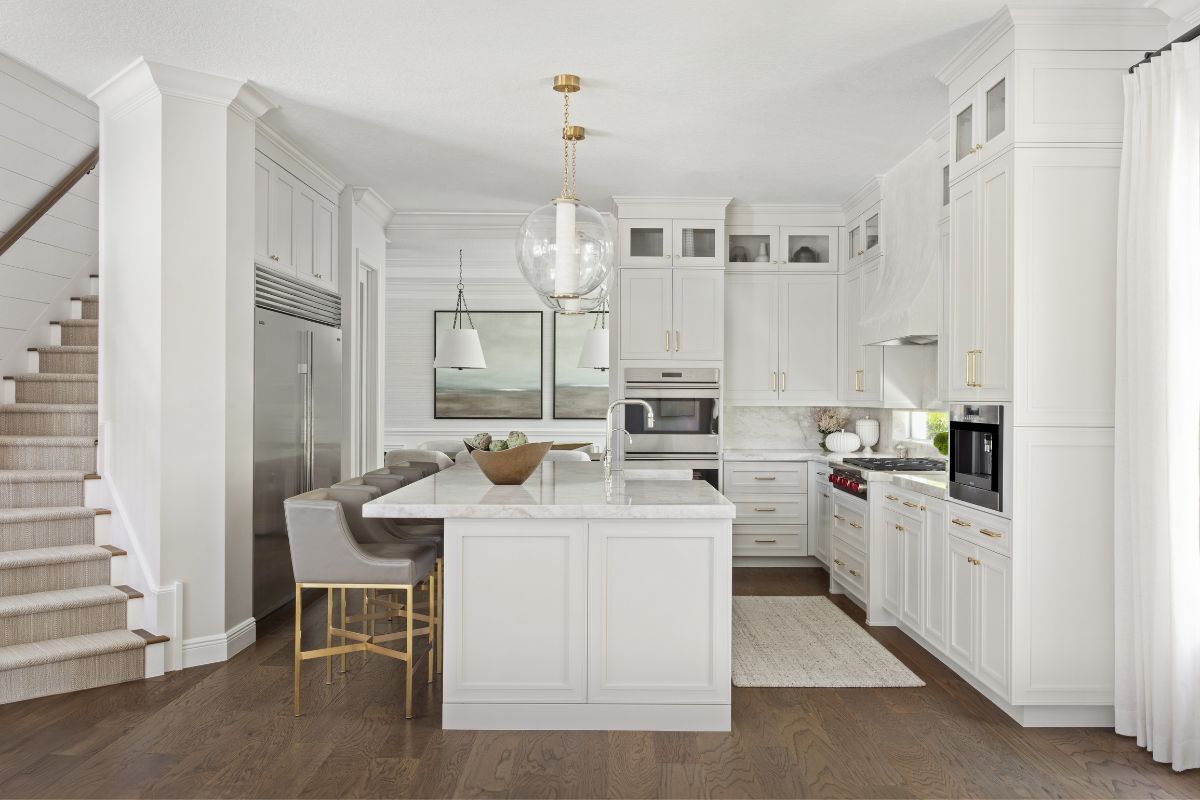
Engineered hardwood is the choice when you want real wood and nothing else will do.
A hardwood veneer sits over a cross-layered plywood core, which gives you authentic grain and the ability to refinish once or twice, with better stability than solid wood. The catch in a kitchen is moisture: it's more tolerant than solid hardwood, but it is not waterproof.
The surface is the genuine article. It's actual oak, maple, or hickory, so it has a depth of grain and underfoot warmth that LVP and laminate only imitate.
It's more stable than solid wood, not invincible. The layered core resists the cupping and gapping that humidity swings cause, which is why many makers approve it for kitchens and over slabs.
Plan around its vulnerabilities. Standing water, leaks, or heavy wet-mopping can swell or delaminate boards, and the surface scratches and dents like any wood.
Pros:
authentic wood look and feel
more humidity-tolerant than solid hardwood
refinishable at least once or twice
Cons:
not waterproof, the biggest risk in a kitchen
pricier than LVP and many tiles
shows wear in busy households without care
6. Natural Stone (Marble, Travertine, Slate)
Best for: A unique, high-end floor for homeowners who'll commit to upkeep.
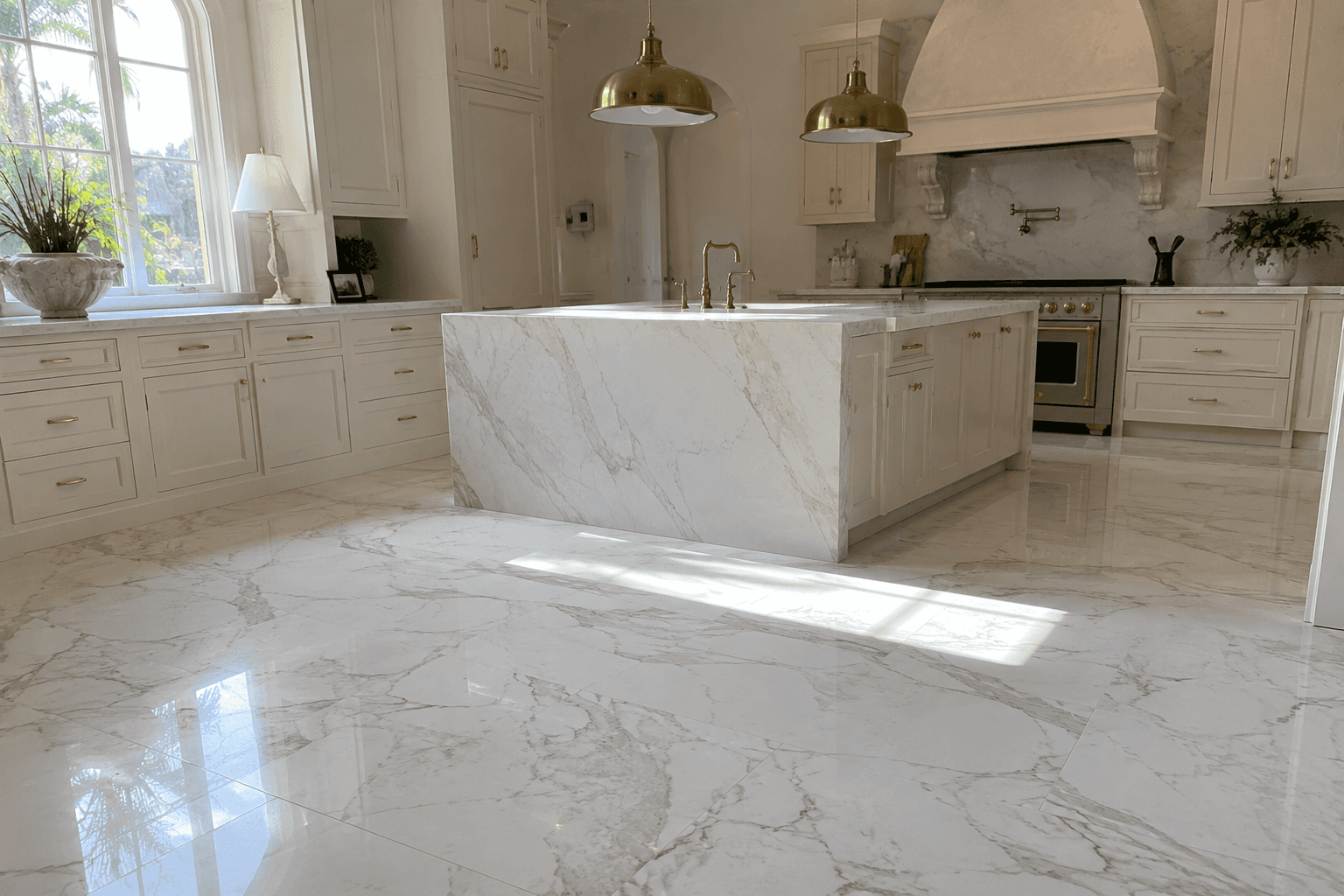
Natural stone is the floor you choose when you want something one-of-a-kind and you're prepared to look after it. Every tile is cut from real stone, so the veining and color never repeat, and a well-kept stone floor can outlast most man-made options.
It's also the most demanding choice here – porous, sealing-heavy, and the priciest to buy and set.
Each stone behaves differently. Marble brings dramatic veining but etches from acids like lemon and vinegar; travertine runs warm and rustic; slate is textured, naturally slip-resistant, and the toughest of the three.
It's cool underfoot in a hot climate. Stone has a natural cooling effect that feels good in warm rooms, and many stones flow continuously from kitchen to patio.
Maintenance is the real cost. Most stones need regular sealing to fend off stains, and acidic spills or harsh cleaners can dull and mark the surface.
Pros:
truly unique, high-end aesthetics
decades-long lifespan
adds prestige and perceived value
Cons:
high upfront cost ($8–47/sq ft installed)
ongoing sealing and careful cleaning
hard, cold, and heavy enough to need structural consideration
7. Polished or Sealed Concrete
Best for: A minimalist, continuous floor in a modern or new-build kitchen.
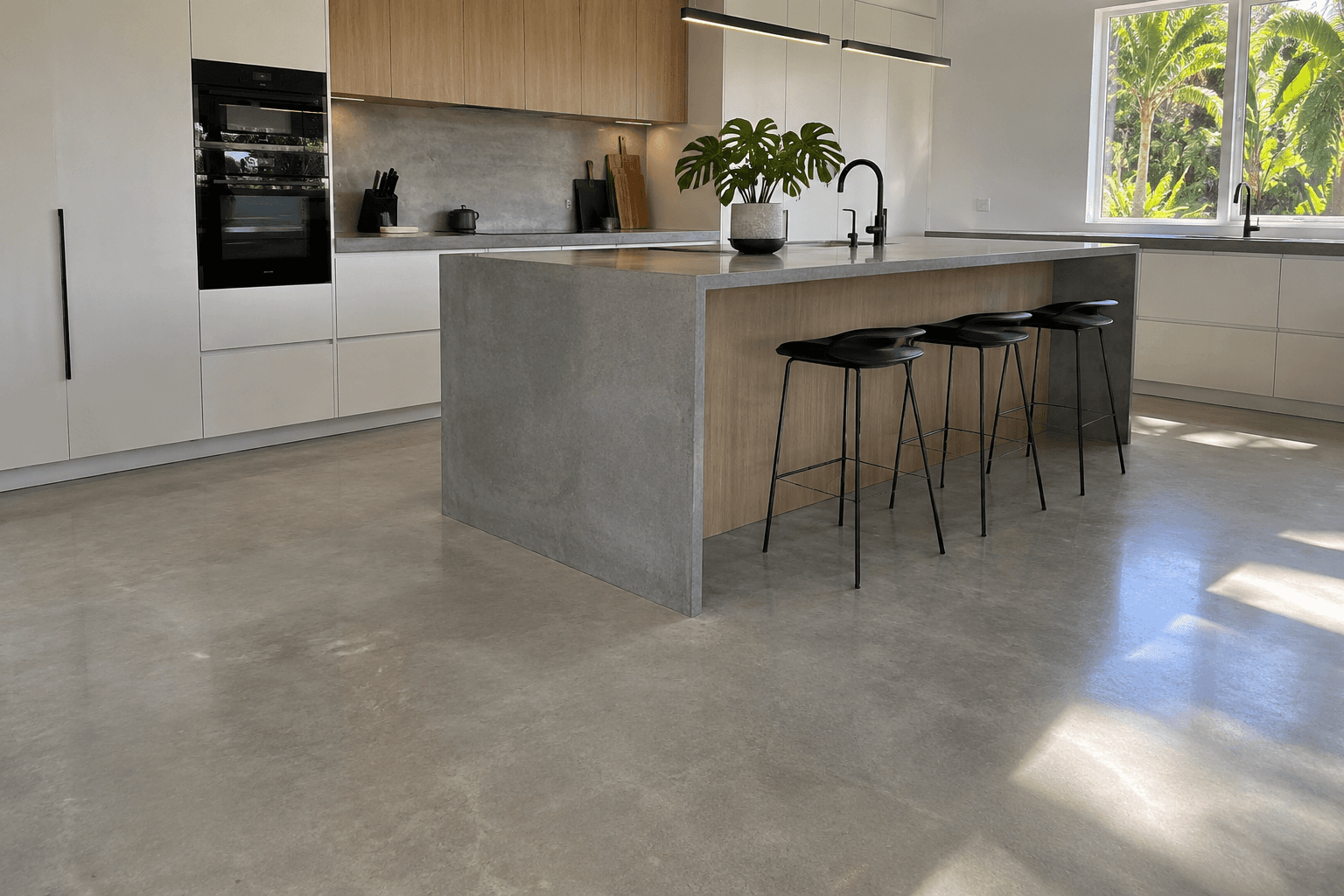
Polished concrete turns the structural slab itself into the finished floor, which makes it a natural fit for modern, slab-on-grade homes. The slab is densified, ground smooth with diamond abrasives, then sealed – no separate flooring layer at all.
It's extremely durable and low-maintenance, with a sleek, seamless look that carries from kitchen into adjacent living space.
It's a near-permanent surface. Properly done, polished concrete lasts decades with little more than sweeping and the odd reseal every few years.
Sheen is a safety decision. A high polish can get slippery when wet, so many kitchens use a lower sheen or an anti-slip treatment.
Retrofits are the hard part. Polishing an existing slab is messy, noisy, and specialist work, and hairline cracks can develop over time – character to some, a flaw to others.
Pros:
very long lifespan and low lifecycle cost
modern, seamless, indoor-outdoor look
pairs well with radiant heat where it's used
Cons:
hard and cold, so rugs are almost mandatory at the sink and prep zones
prone to hairline cracking
disruptive, specialist install
How To Choose The Best Kitchen Flooring?
The best type of flooring for a kitchen is the one that matches your top priority – so decide what that priority is before you fall for a sample.
Work through these in order and the field narrows fast:
Start with water resistance. In a kitchen, spills and humidity are constant, so porcelain tile is the most water-resistant choice, with quality LVP a strong runner-up for everyday spills. Just remember no plank floor is truly waterproof – water can seep through seams and sit underneath – so for wet zones, sealed tile is the safer bet.
Weigh durability, pets, and traffic. The most durable kitchen flooring is porcelain, natural stone, or polished concrete – all decades-long surfaces. For the best flooring for a kitchen with dogs, prioritize scratch resistance: porcelain and a thick-wear-layer LVP take claws and skidding bowls in stride.
Factor in comfort and air quality. Hard floors (tile, stone, concrete) are tough on joints during long cooking but stay cool and pleasant; LVP and wood are kinder underfoot. The best flooring for people with asthma is a hard, non-porous surface – tile, LVP, or sealed concrete – because none of them harbor allergens the way soft flooring can.
Set your budget tier. Ceramic and waterproof laminate anchor the value end; LVP and porcelain sit mid-range; engineered wood, designer stone, and complex concrete climb from there.
Then choose the look. Should the kitchen floor be lighter or darker than the countertop? There's no rule – contrast is what reads well. Pair a light floor with darker counters, or a darker floor with lighter counters, so the two surfaces define each other rather than blur together.
Wondering Which Option Suits Your Home?
We'll shape the right scope, budget & design before building starts.
Best Kitchen Flooring FAQs
How much does porcelain tile flooring cost per square foot installed?
Porcelain tile flooring typically runs about $8–20 per square foot installed, with the final number driven by tile size, layout complexity, and subfloor prep. Large-format and patterned layouts like herringbone sit at the higher end because they take more labor and create more waste.
Should you install kitchen flooring before or after the cabinets?
Kitchen flooring is usually installed after the cabinets when using tile, and the sequence depends on the floor type and whether your cabinets are standard or custom height. Getting this order wrong can trap appliances under counters or complicate future replacements, so it's a decision worth locking in during planning, not on install day.
Can you install new kitchen flooring over existing tile or flooring?
You can often install new kitchen flooring over existing tile or floors – floating options like LVP and waterproof laminate are designed for it, while tile and hardwood usually need a sound, level surface first. The catch is height: adding a layer can raise the floor enough to affect appliance clearances and door swings.
Which kitchen flooring adds the most resale value?
Porcelain tile and engineered hardwood tend to add the most resale value in kitchens, since buyers read them as durable, premium, and low-risk. The bigger driver is cohesion – flooring that flows with the rest of the home reads as more valuable than a one-off material that stops at the kitchen doorway.
Conclusion
Every floor here is a trade-off, and the smartest pick comes from being honest about which trade-off you can live with.
Porcelain and LVP earn their popularity by handling spills, traffic, and humidity with little drama, while stone, wood, and concrete ask for more care in return for a look the others can only approximate.
Budget, comfort underfoot, how hard your kitchen gets used, and what pairs with your counters all pull in different directions, so the best kitchen flooring is the one that resolves those tensions for your home specifically.
That choice lands better when it's made early, as part of a clear scope and budget. A free discovery call is where we help you weigh those priorities and fold flooring into a design plan your contractor can build from before construction starts.
Pricing Disclaimer
The pricing figures referenced in this article are derived from an 18-month trailing analysis of projects completed by reputable contractors using quality materials and industry-standard construction practices. These figures are intended for general informational purposes only. Market conditions, material costs, labor rates, and contractor availability can change rapidly, and Palm Club Design Group makes no representation or guarantee that the prices cited reflect current costs or will apply to any future project. Readers should obtain up-to-date quotations from qualified professionals before making any budgeting or planning decisions.


Thinking About a remodel?