Kitchen
Quartz vs Marble – Which Is Better?

Neither one wins outright.
Quartz vs marble comes down to a trade-off between practicality and natural character: quartz is the harder-wearing, low-maintenance surface, while marble is the authentic stone that ages into a patina.
The right call depends on how you cook, how you live, and how you feel about wear over the years.
Here's the full comparison across looks, durability, maintenance, and cost.
Key Notes
Quartz resists scratches, stains, and etching; marble shows wear faster.
Marble needs sealing every 6–12 months; quartz needs none.
Installed costs overlap heavily: quartz ~$90–$220+, marble ~$80–$250+ per square foot.
The Difference Between Marble and Quartz
The difference between marble and quartz starts with what they are, and that single distinction drives almost every other decision down the line.
Marble is natural stone. It's a metamorphic rock quarried from the earth, porous by nature, with veining that's geologically unique to every single slab.
Quartz is engineered. It's roughly 90% ground natural quartz blended with 5–20% resins and pigments, pressed into a dense, non-porous slab with a controlled, repeatable pattern.
Porosity, heat behavior, staining, uniqueness – every difference that follows traces back to "dug out of the ground" versus "made in a factory."
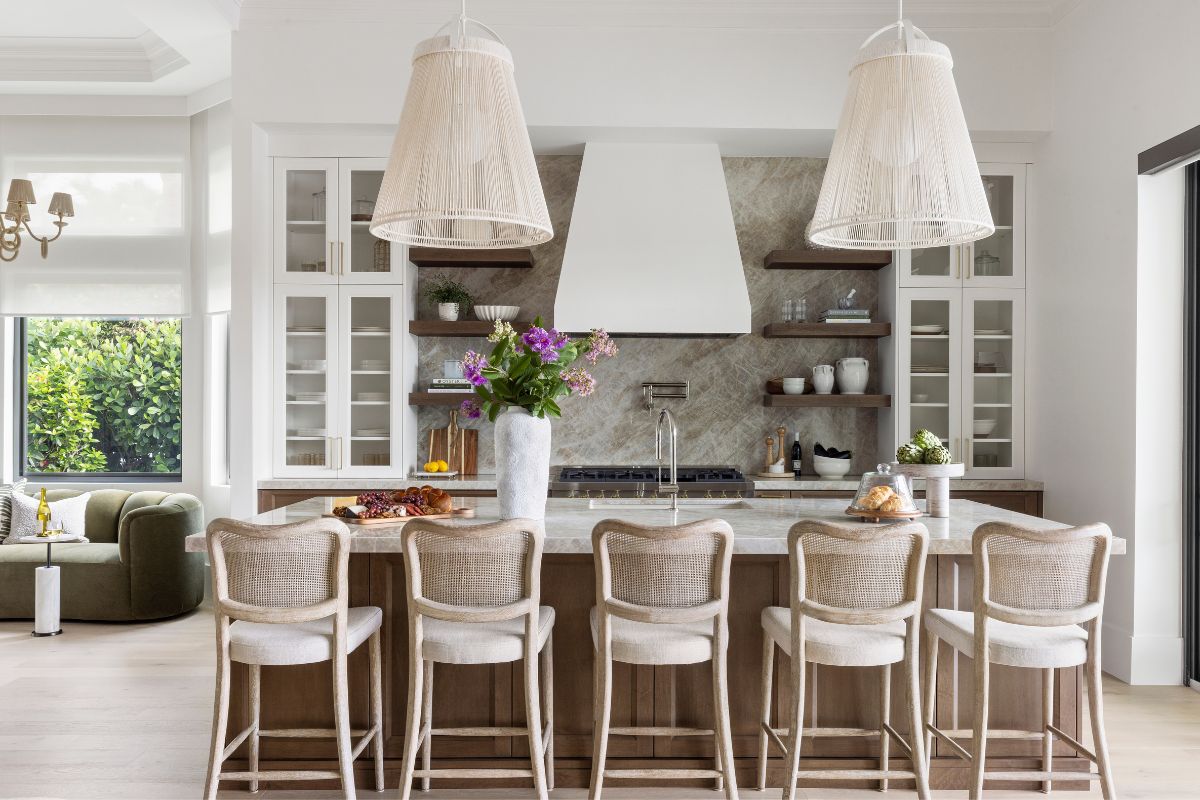
Quartz vs Marble Countertops On Looks
On pure appearance, the quartz vs marble countertops question is really a choice between control and individuality.
Marble Brings Depth You Can't Fake
The veining reads like smoke or brushstrokes, and polished marble has a soft, almost translucent luminosity that synthetic surfaces only approximate. Every slab is one of a kind, and over time it develops a patina that some homeowners genuinely love.
Quartz Brings Consistency & Range
Because it's manufactured, the pattern is repeatable from slab to slab – which matters a lot when you're running a long perimeter, matching a big island, or replacing a piece years later.
One Thing Worth Knowing:
Modern marble-look quartz has gotten very convincing.
From across a room, most people can't tell. High-end veined quartz from brands like Cambria, Caesarstone, and Silestone mimics Calacatta and Carrara looks closely enough to fool a lot of trained eyes.
Up close, a sharp eye still catches it. The veining on quartz is slightly too regular, and it lacks the true crystalline depth of real stone.
If you want a guaranteed look and easy matching, quartz has the edge. If you want unrepeatable natural character and don't mind hand-picking your slab, marble is unmatched.

Durability & Performance: How Each Holds Up To Daily Use
Quartz is the more durable everyday surface, and it's not especially close in a busy kitchen. Marble can last just as long structurally, but it shows its life faster.
Here's how they compare on the things that damage a countertop:
Scratching – quartz wins by a wide margin. Quartz sits around 7 on the Mohs hardness scale while marble is roughly 3–4, which means a steel knife (about 5.5) can scratch marble but won't touch quartz.
Etching – a marble-only problem. Acids like lemon, wine, and vinegar chemically react with marble's calcite and leave dull, matte marks that don't wipe off. Quartz has no calcium carbonate to react with, so it's effectively immune in normal use.
Staining – porosity is the deciding factor. Quartz is non-porous, so wine, coffee, and oils sit on top and wipe away. Marble is porous and can start absorbing a coffee or red wine spill within minutes if it's left sitting.
Heat – marble is tougher, but neither is safe. Marble shrugs off brief contact with a hot pan better than quartz, whose resin can scorch, yellow, or crack from thermal shock. Both still need trivets – a pan straight off the hob is a bad idea on either one.
Chipping – marble is more brittle at the edges. Its softer, calcite-based structure chips more readily at corners and thin profiles, while quartz's engineered matrix gives it tougher edges.
The Honest Summary:
In a hard-working family kitchen, quartz keeps looking new with very little discipline.
Marble works too, but only if you accept that scratches, etches, and a softening finish are part of the deal.
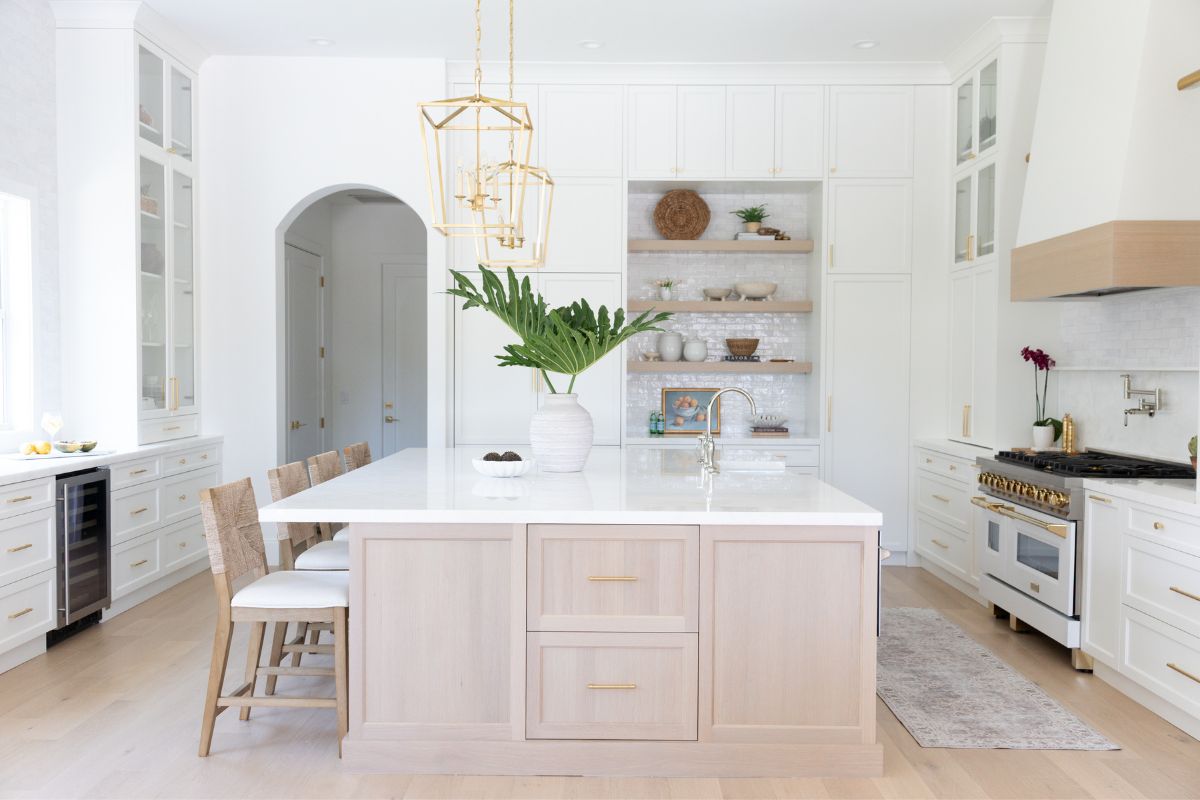
Maintenance & Care: What Ownership Requires
This is where day-to-day life with each surface really splits.
Quartz is close to wipe-and-go; marble asks for a routine.
Quartz: Clean & You're Done
No sealing, ever. The non-porous resin matrix means there's no schedule to keep and nothing to reapply.
Simple cleaning. Warm water and mild dish soap handle everyday messes – just skip abrasive pads and harsh solvents that can dull the finish.
Marble: Clean, Seal & Occasionally Restore
Reseal on a schedule. Plan on an impregnating sealer roughly every 6–12 months, leaning toward six on lighter stones and heavy-use kitchens.
Watch your cleaners. pH-neutral products only – vinegar and citrus sprays will etch marble fast, even the "natural" ones.
Expect occasional pro work. Busy kitchens may need professional honing or polishing now and then to refresh etches and wear.
One counterpoint in marble's favor: it's more repairable.
A stone specialist can fill chips, hone out etching, and resurface a whole run in place, where quartz damage is rarer but trickier to blend seamlessly because of the resin.
Quartz vs Marble Cost In Palm Beach
On quartz vs marble cost, the two overlap far more than people expect – which is exactly why price alone rarely settles the decision.
Surface | Installed cost (per sq ft) | Notes |
Quartz | ~$90–$220+ | Tiered by pattern and brand; builder-grade at the low end, designer marble-look at the top |
Marble | ~$80–$250+ | Carrara sits low; Statuario mid; Calacatta runs $180–$200+ material-only |
Two Things Move The Real Number More Than The Headline Rate:
Add-ons do the heavy lifting. Waterfall edges, full-height slab backsplashes, and cutouts can add thousands on either material – a single waterfall end alone often runs $1,500–$3,600+.
Marble carries an ownership cost. Routine professional sealing tends to run about $100–$200 per year, which quartz simply doesn't have.
Which Is Better For You – Quartz Or Marble?
It depends entirely on the kitchen and the household using it. Map your situation to one of these and the answer usually gets obvious.
Lean Quartz If You:
Run a busy or family kitchen. Heavy cooking, frequent spills, and kids all favor a surface that stays looking new with minimal fuss.
Want low maintenance and a consistent look. No sealing, easy matching across islands and long runs, and predictable patterning from the showroom sample to the install.
Are doing a bathroom. Non-porous quartz resists cosmetics, toothpaste, and moisture without any sealing routine.
Lean Marble If You:
Want authentic, one-of-a-kind veining. Nothing engineered replicates the depth and uniqueness of real stone at close range.
Read patina as character, not damage. Etching and soft wear over time feel right to you rather than like a flaw to fix.
Have a lighter-use or careful household. You're willing to seal, use boards, and wipe spills promptly.
A Common Middle Path:
Put a dramatic marble or marble-look quartz on a statement island for visual impact, then run hard-wearing quartz across the working perimeter.
You get the showpiece and the practicality in one kitchen.
Planning A Kitchen Remodel In South Florida?
Get your scope and budget right before any material decisions lock in.
Quartz vs Marble FAQs
How long do quartz and marble countertops last?
Both quartz and marble countertops can last several decades when installed correctly and cared for properly. The difference is appearance over time – quartz holds its original look for 20–30+ years, while marble lasts structurally just as long but develops a patina along the way.
Is marble more expensive than quartz?
Marble is not automatically more expensive than quartz – the two overlap heavily, and an entry-level marble like Carrara can cost less than premium designer quartz. What pushes marble higher is rarer stone such as Calacatta, plus the ongoing sealing and maintenance quartz doesn't require.
Can you put hot pans on quartz or marble countertops?
You should not place hot pans directly on either quartz or marble countertops. Marble tolerates brief heat better, but quartz resin can scorch or crack from thermal shock – both surfaces need trivets or heat pads to stay protected.
Conclusion
The quartz vs marble decision rarely turns on which stone is objectively superior, because both can last decades and both look beautiful on day one.
It turns on the kind of homeowner you are.
Quartz keeps its showroom finish through heavy cooking, kids, and the occasional ignored spill, asking almost nothing of you. Marble gives you depth and one-of-a-kind veining no engineered slab can match, but it wants sealing, careful cleaners, and an acceptance that it'll age into a patina.
Cost overlaps more than most people expect, so it's lifestyle and tolerance for upkeep that usually break the tie.
Where that choice gets tricky is how it interacts with everything else – your layout, your budget, your finishes. A free discovery call is a low-pressure way to think through your remodel as a whole, with scope and numbers aligned before any material decisions are locked in.
Pricing Disclaimer
The pricing figures referenced in this article are derived from an 18-month trailing analysis of projects completed by reputable contractors using quality materials and industry-standard construction practices. These figures are intended for general informational purposes only. Market conditions, material costs, labor rates, and contractor availability can change rapidly, and Palm Club Design Group makes no representation or guarantee that the prices cited reflect current costs or will apply to any future project. Readers should obtain up-to-date quotations from qualified professionals before making any budgeting or planning decisions.


Thinking About a remodel?