Kitchen
Granite vs Marble (Pros, Cons & How To Choose)

Granite is harder, more heat- and scratch-resistant, and easier to live with day to day. Marble is softer and more prone to staining and etching, but gives you that veined, classic look people redo their whole kitchen for.
For most homeowners, the practical gap between the two matters more than the visual one – so here's the full breakdown to help you choose for your home.
Key Notes
Granite rates 6–7 on the Mohs scale; marble sits softer at 3–5.
Marble etches from acids even when sealed; granite mostly resists it.
Installed costs overlap: granite $96–$216/sq ft, marble $80–$250+/sq ft.
Granite suits busy kitchens, while marble works best in statement, low-traffic spaces.
Granite vs Marble: The Quick Verdict
The granite vs marble decision comes down to a handful of factors that change how the surface performs and how it ages.
Here's the side-by-side before we get into the why:
Factor | Granite | Marble |
Hardness (Mohs) | ~6–7, quite hard | ~3–5, noticeably softer |
Scratch resistance | High; shrugs off everyday use | Moderate; marks more easily at edges |
Heat resistance | Very good with hot pans | Good, but repeated direct heat can discolor |
Stain & etch | Resists well when sealed | Porous; etches from acids even when sealed |
Maintenance | Seal every 1–3 years | Seal every 6–12 months, stricter cleaning |
Look | Speckled, crystalline, busier | Flowing veins, classic, sculptural |
Material cost band | Mid-range, broad | Overlaps granite; premium marbles climb high |
Lifespan | 25–50+ years with sealing | 20+ years; 50+ with diligent care |
Is Granite The Same As Marble? The Core Difference
No – granite and marble are different rock types, and that single difference drives almost every practical distinction between them.
Granite is igneous. It forms when magma cools slowly underground, growing interlocked crystals of quartz, feldspar, and darker minerals. That structure is what makes it hard, dense, and speckled.
Marble is metamorphic. It starts as limestone and recrystallizes into calcite under heat and pressure, with mineral impurities stretched into flowing veins. Calcite is soft and acid-sensitive, which is exactly why marble etches.
Durability & Hardness: How Each Holds Up
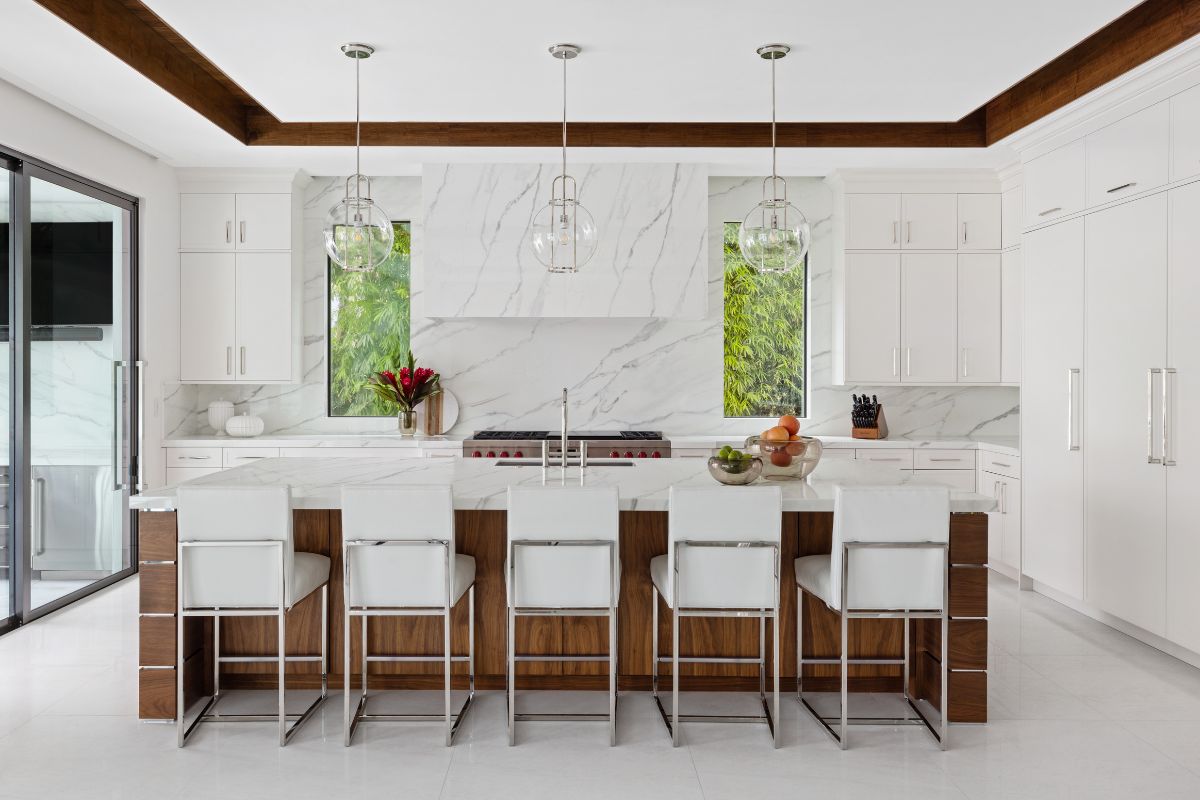
On granite vs marble hardness, granite wins clearly – it's roughly 6–7 on the Mohs scale versus marble's 3–5. Mohs is a comparative scratch test: a harder material scratches a softer one, so a higher number means better real-world resistance.
Here's How That Plays Out Where It Counts:
Scratches. Granite resists scratching from knives, grit, and dragged cookware in normal use. Marble marks more easily, especially around the sink and cooktop, and those marks accumulate into visible wear.
Chips and edges. Granite's dense structure tolerates impacts better, particularly on corners and overhangs. Marble is more prone to small chips where stress concentrates, though minor chips in either stone can usually be filled.
Heat. Granite handles hot pans well (trivets still recommended). Marble takes some heat but risks discoloration and thermal shock under repeated direct contact.
Wear over time. Granite holds its polish longer. Marble softens to a duller, lived-in surface – patina to some, premature aging to others.
So, if your kitchen sees kids, pets, and heavy cooking, granite forgives more. Marble works, but it asks you to be a careful user.
Appearance: Speckled vs Veined
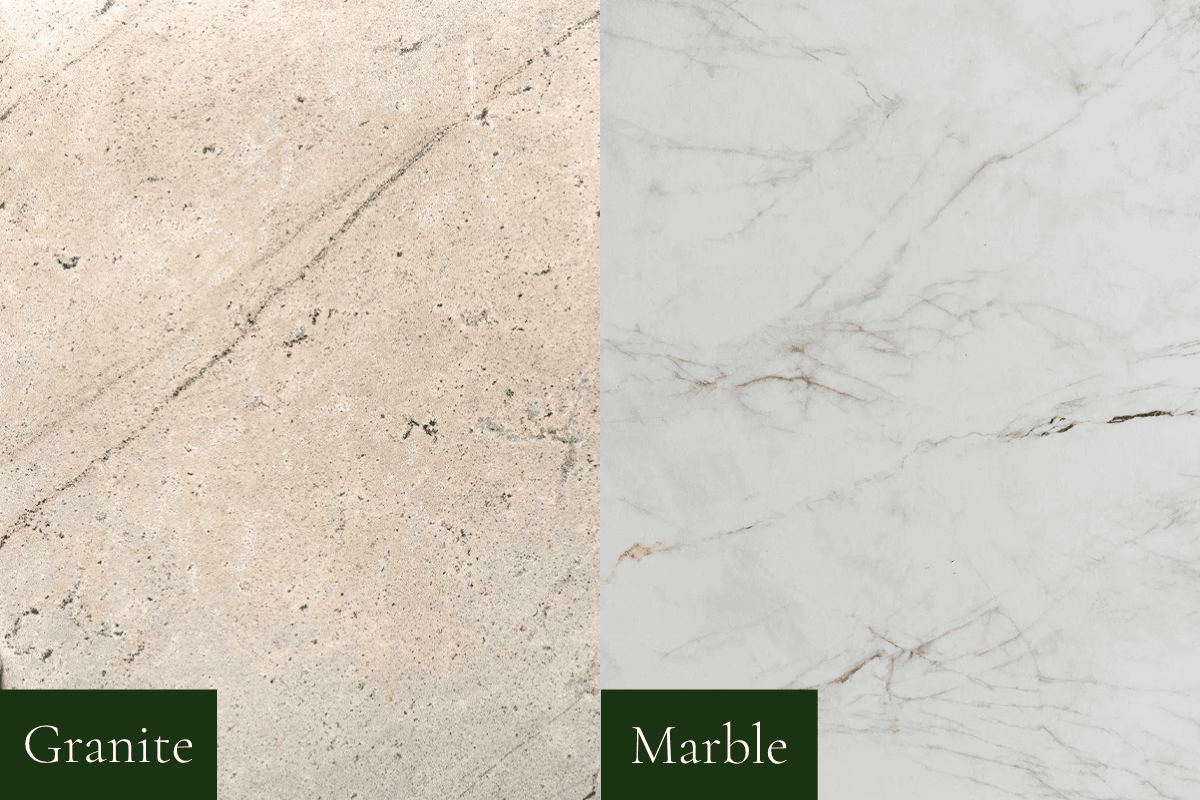
The clearest visual difference between marble and granite is pattern – granite reads as granular and crystalline, marble as flowing veins on a calmer background.
This is usually the reason people want marble despite the upkeep.
Granite's signature. A salt-and-pepper, flecked look with a broad color range (white, grey, black, green, even red) and a subtly sparkly surface when polished. It reads busier, which some rooms love and some don't.
Marble's signature. Soft, ribbon-like veining over a white, cream, or grey base – the "hotel lobby" look. Veins can be subtle (many Carraras) or bold and high-contrast (Calacatta-style).
Maintenance: What Each Asks of You
Maintenance is where granite vs marble gets real, because marble asks more of you both daily and over the years.
Sealing Cadence:
Granite: Reseal roughly every 1–3 years; denser, darker stones can stretch to 2–4. A quick water-drop test tells you when it's due.
Marble: Reseal about every 6–12 months, and immediately after install – it's more porous and usually sits in stain-sensitive spots.
Cleaning Discipline (Applies To Both, Stricter On Marble):
Avoid vinegar, citrus, bleach, ammonia, and abrasive pads – they dull and scratch stone.
Use warm water with pH-neutral dish soap, or a stone-specific cleaner for deeper cleans.
Sealing doesn't stop etching. Etching is acid chemically dissolving a microscopic layer of marble's calcite, leaving dull spots – and a sealer only slows liquid absorption (it can't prevent that reaction).
A splash of lemon or wine left to sit can mark sealed marble.
Granite, with little to no calcite, mostly sidesteps this.
Granite vs Marble Cost
On granite vs marble cost, the two overlap more than most people expect – and the fabrication choices you make usually move the final number more than the stone itself.
In Palm Beach, here's the installed range:
Granite: Roughly $96–$216 per square foot installed, with most kitchens landing in the middle.
Marble: Roughly $80–$250+ per square foot installed. Carrara sits at the affordable end (~$60–$100/sq ft material-only) while Calacatta climbs to $180–$200+ material-only.
What Swings The Invoice On Either Stone:
Edges, cutouts, and thickness add up quietly – decorative edges run per linear foot, and every sink or cooktop cutout is its own line item.
Waterfalls and slab backsplashes are the big movers. A single waterfall side can add four figures fast on both materials.
How To Choose: Matching The Stone To Your Home
The smartest way to settle marble or granite countertops is to choose by how the space gets used. Match the material to the life happening on top of it.
Lean granite for busy family kitchens, avid home cooks, rentals, and vacation homes you rent out. It absorbs hot pans, kid spills, and inconsistent cleaning without complaint.
Lean marble for statement zones, baking islands (its cool surface is loved for pastry), powder rooms, and design-first second homes where a careful owner controls the wear.
Use both – the most common luxury-kitchen pattern. Marble where your eye lands first, granite where life is hardest on the surface.
Will Your Selections Survive The Build?
We make sure design choices fit your scope and budget first.
Granite vs Marble FAQs
How can I tell if my countertop is granite or marble?
To tell granite and marble apart, look at the pattern: granite shows speckled, crystalline flecks, while marble shows flowing veins over a more uniform base. A telling test – a drop of lemon juice left briefly will dull (etch) marble but not granite.
Is granite or marble better for bathroom countertops?
Marble is often a better fit for bathrooms than kitchens, since vanities see lower traffic and far less acid and heat exposure than a cooktop. Granite still works well in busy or shared baths where durability and low upkeep matter most.
Which adds more value to a home, granite or marble?
Both granite and marble read as premium natural stone to buyers, so the value lift comes more from quality and execution than the stone type. In most Palm Beach homes, natural stone is an expected finish – dated laminate hurts perception far more than the granite-versus-marble choice helps it.
Is granite or marble better for an outdoor kitchen?
Granite is the stronger choice for an outdoor kitchen, since it handles sun, heat, and weather better than marble. Marble is best kept indoors – repeated UV exposure and acidic rain can discolor and etch it over time.
Conclusion
Granite vs marble isn't really a contest of which stone is better, but it's a question of which trade-off fits your kitchen.
Granite gives you hardness, heat tolerance, and a surface that mostly looks after itself, which is why it ends up in the busiest kitchens. Marble gives you that veined, lived-in beauty, and asks for more sealing, gentler cleaning, and a bit of patience with patina in return.
Their costs overlap enough that how you cook and live should settle it, not price.
If you'd rather not guess, a free discovery call gets you guidance on how a choice like this fits your scope, budget, and build-ready design before construction begins.
Pricing Disclaimer
The pricing figures referenced in this article are derived from an 18-month trailing analysis of projects completed by reputable contractors using quality materials and industry-standard construction practices. These figures are intended for general informational purposes only. Market conditions, material costs, labor rates, and contractor availability can change rapidly, and Palm Club Design Group makes no representation or guarantee that the prices cited reflect current costs or will apply to any future project. Readers should obtain up-to-date quotations from qualified professionals before making any budgeting or planning decisions.


Thinking About a remodel?